ISO 42001 AI Management System Requirements for MCP Deployments
Organizations running MCP servers must prove they control access, risk, and oversight in production.

ISO 42001 gives organizations running MCP servers a practical blueprint for AI governance. Its AI management system requirements cover the risks that arise when agents reach enterprise data and act through tools. The central test is whether an organization can prove that access, risk, ownership, and oversight are controlled in production.
What ISO 42001 actually governs, and why MCP deployments land inside its scope
ISO/IEC published ISO/IEC 42001:2023 in December 2023 with the title Information technology (Artificial intelligence) (Management system). It is a management system standard. It governs the processes surrounding AI systems an organization develops, provides, or uses, rather than prescribing how a particular model is trained. The AI management system, or AIMS, sits above individual systems and defines how the organization governs them.
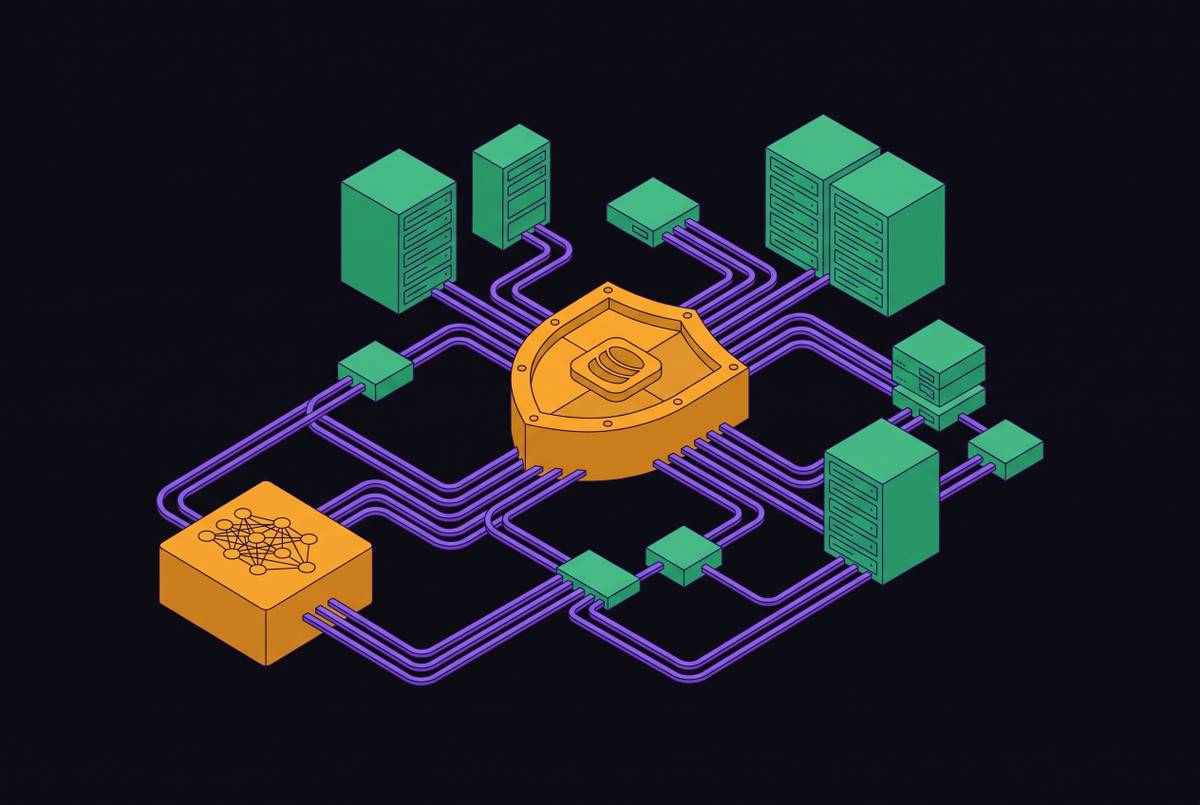
That distinction brings operational infrastructure into scope. An MCP server exposes tools and data to AI agents, giving the deployment a data footprint, an access scope, a lifecycle, and potential organizational impacts. These are governance concerns even when the organization did not build the underlying model.
ISO 42001 applies regardless of an organization’s size or type. It also shares the management-system structure used by ISO 27001, making integration feasible for organizations with an existing information security certification. Its Annex A provides 38 controls across nine sections, covering areas including roles, data governance, lifecycle management, and third-party relationships. An organization running MCP servers is already conducting activities inside that scope, whether or not it has recognized them as such.
Why ISO 42001 became a procurement and regulatory gate in 2026, not a future aspiration
Deadlines set by regulators, demands from enterprise buyers, and early certifications by major providers have made AI governance a requirement for selling in the market. AWS, Microsoft, and Anthropic’s certifications have raised the diligence bar for other AI suppliers. Buyers expect more than an assurance that responsible AI is important. A certificate or credible implementation roadmap gives them something concrete to assess.
That puts pressure on engineering and product leaders too. A deployment may work but still fail a buyer’s governance review, so teams that deliver it must prepare for certification alongside the compliance team. The typical certification timeline is 9–18 months from kick-off to certificate. Against the August 2026 enforcement moment, postponing the work leaves little room to resolve missing controls or evidence.
CE marking, EU database registration, notified-body conformity assessment, and serious-incident reporting timelines sit outside the standard’s scope. ISO 42001 gives organizations running MCP deployments a framework for answering the governance questions that procurement and regulatory scrutiny bring forward.
The governance gap MCP deployments create by default
MCP is the open standard defining how AI assistants communicate with external systems and data sources. Its adoption across major AI labs has made it the de facto protocol for agent-to-tool connectivity. But connectivity is not an authorization policy. A default implementation often connects through a service account or API key, granting the agent access to everything that credential can reach.
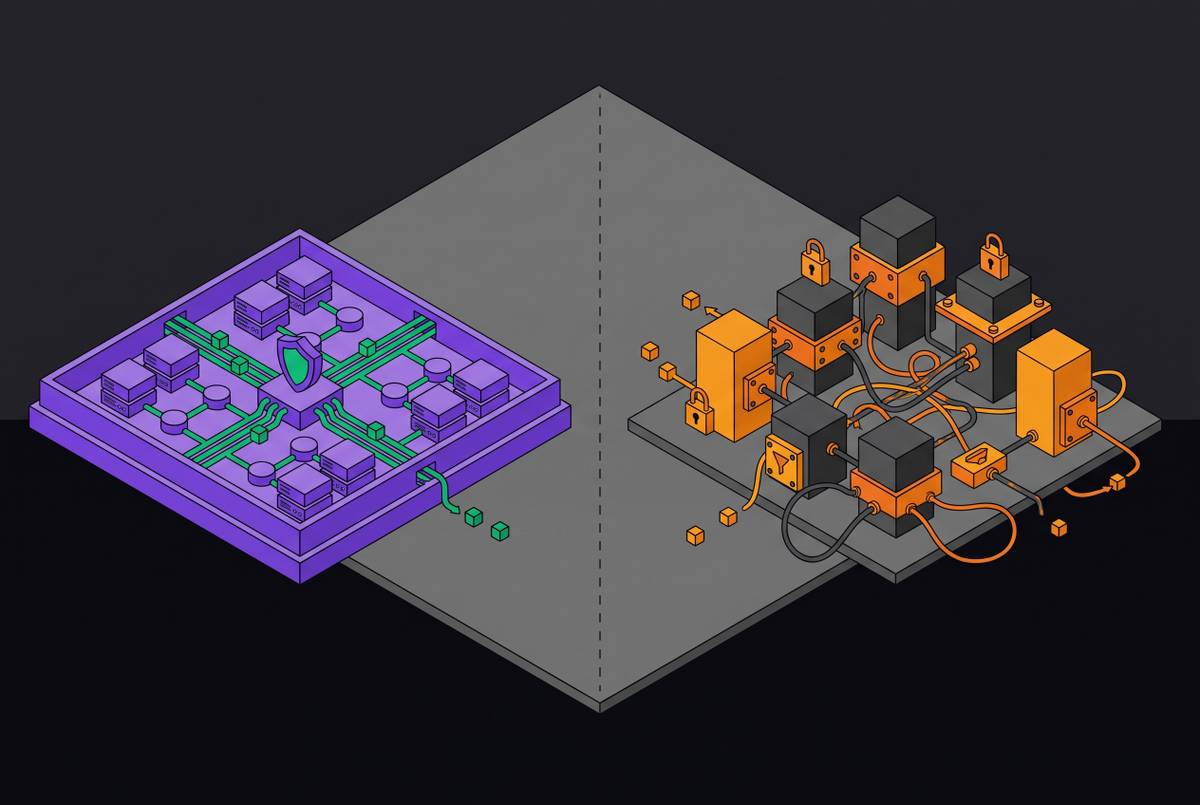
Under that shared-credential pattern, the integration does not distinguish what each user should be allowed to do. If one user can reach a resource through it, other users effectively can too. The protocol also brings risks such as context injection, privilege escalation through chained tool calls, and leaks of sensitive data through context-sharing mechanisms. Broad credentials give those risks a larger reach.
Enterprise-Managed Authorization, or EMA, addresses part of this problem. Promoted to stable status in mid-2026 and adopted by Anthropic, Microsoft, and Okta, it puts access to MCP servers under centralized identity-provider control. Yet its boundary is explicit. EMA controls a user’s permission to connect a client to a server and the scope of that connection, but does not inspect MCP traffic after issuing the token. Authorization for individual actions remains the organization’s responsibility.
How Clause 6 risk and impact assessment requirements map onto MCP server onboarding
Clause 6 requires a written risk and impact assessment before a system goes into production. For MCP, adding a server is the event that triggers this work. The assessment must establish what data the server can reach, which operations agents can perform, and what unauthorized access or exfiltration could cause. Its actual access scope defines the exposure.
Clause 6.1.4’s impact assessment needs to cover the blast radius if a server is compromised or misconfigured, including everything its service account can reach. It must also cover chain-access risk when agents call several servers in turn. The assessment must cover the explainability gap too, because it is harder to account for what an agent does when it leaves no human-readable decision trail.
A server onboarding checklist should make these assessments a change-management gate that the server must pass before it receives production traffic. Clause 6 also connects risk treatment to measurable objectives, so a proposed control needs an owner and a review cadence. “Implement per-operation authorization” cannot remain a standing intention. The auditor’s question is concrete, asking to see the impact assessment completed before that server went live.
How Annex A access controls map onto per-operation authorization in MCP
Once the risks are documented, access controls must constrain what agents can actually do. Annex A.7’s data governance requirements cover need-to-know restrictions and the treatment of personal data in AI systems. A shared credential cannot enforce those distinctions by itself. An agent may inherit a service account’s full CRM access even when the user asked it to look up one contact.
Per-operation authorization closes that specific gap. It checks whether this user may perform this action on this data for each individual MCP operation. Role-level access alone does not establish least privilege when agents can chain calls across servers.
The supporting controls include OAuth 2.0 authentication with credentials outside AI context, role-based and attribute-based authorization, attribution-level logging, path and scope restrictions, rate limiting, and sensitivity-label evaluation. These controls serve a common purpose. They make an agent’s reach reflect an organizational decision rather than the accidental breadth of a service account.
The data controls also require a record of what is being used. Annex A.7.3 covers documented, lawful data acquisition and selection, including sources, categories, and legal basis, while A.7.5 addresses provenance across creation, updates, transformations, validation, and transfers. For an MCP server exposing CRM or HR data, permission and provenance are connected obligations. Access reviews must also restart when changes, including a new tool, alter what the server permits.
How Clause 8 lifecycle controls apply to MCP server deployment, change, and decommission
Clause 8 extends governance across operational planning and control. For MCP deployments, onboarding, change, scaling, and retirement each create work to document and control. Production runbooks must set out how to apply the risk treatments from Clause 6. Deployment scripts alone do not provide that governance.
A server’s record must establish what data it reaches, which operations it supports, who approved it, and how it will be retired. An identity lacking a registry entry leaves an access surface outside the AIMS records used for audit and incident response. When the server wraps third-party APIs, SaaS platforms, or foundation-model endpoints, the record must also be supported by third-party assurance, including vendor questionnaires, SLA evidence, and data-processing agreements.
Scale makes informal handling untenable. Uber executes a reported 60,000 agent task executions per week across internal services, illustrating why ad hoc lifecycle governance cannot keep pace with expanding agent use. Registry-enforced onboarding and automated lifecycle tracking are needed so that governance does not depend on manual follow-up.
Retirement needs the same discipline as deployment. If a retired MCP server still has active service-account credentials, it leaves a live attack surface with no one in charge of its governance. Planned decommission procedures must include credential rotation and access revocation. Removing the server from active use is not the end of its access lifecycle.
How Clause 9 audit and monitoring requirements map onto MCP observability
An audit log read only after an incident is a postmortem. Clause 9 requires monitoring, measurement, and evidence of AIMS performance, making visibility part of control operation. For MCP, the evidence must show which agent accessed which resource, under whose authorization, at what time, and with what outcome. A record of a connection cannot answer those questions for every action.
Clause 9.1 requires the organization to determine what it monitors, how it measures performance, and when it analyzes results. In MCP operations, real-time or near-real-time visibility supports that requirement by exposing problems before damage propagates. Retrospective exports serve a different purpose. They cannot by themselves demonstrate continuous oversight of agent activity.
Clause 9.2 then requires planned internal audits to test whether controls work as designed. Logs must connect individual operations to user identity, scope, data object, and outcome so that least-privilege enforcement can be examined. Missing attribution is therefore an evidence gap. Where required monitoring and evidence are absent, the issue becomes a nonconformity.
Those records also go into Clause 9.3’s management review. Top management must review performance using monitoring results, audit findings, and nonconformities at planned intervals. Without evidence from operations, that review can discuss what teams intend to do but cannot judge whether MCP controls are working.
How Clause 5 leadership requirements translate to organizational accountability for MCP governance
Clause 5 makes leadership responsible for the AI policy, documented roles and authorities, and the resources needed to operate the AIMS. Top management must take an active part in the work and retain responsibility when it delegates tasks. In practice, that means executive sign-off on the access policy, registry requirement, and incident-response protocol.
The policy must address agentic AI directly. It needs to establish which MCP servers the organization sanctions, what data they may access, and which authorization model governs them. Clause 5.3 also requires responsibilities and authorities to be assigned and communicated. Each registered server needs a named owner, teams need to know who can approve new servers, and there must be a clear escalation path for out-of-scope agent activity.
These responsibilities address the conditions that permit ungoverned deployment. An access surface found after launch was there from the moment the server went live without governance. Treating its later discovery as a surprise does not explain why no owner or approval process caught it.
Clear accountability can also speed up adoption. Teams with centrally enforced access policies and executive backing have a basis for approving production deployments, rather than reopening unresolved governance questions at every review.
What certification auditors will look for in an MCP-running organization's AIMS evidence
Certification separates documented claims from demonstrated operation. Stage 1 reviews documentation, while Stage 2 tests implementation. The certificate is valid for three years with annual surveillance audits, so evidence must be sustained beyond the initial assessment. A policy written for the audit does not establish that its controls have been operating.
For MCP, the evidence must connect each server to its pre-production impact assessment, access policy, registry entry, and named owner. Per-operation logs must show that least privilege has been enforced over time. Third-party assurance must cover the upstream services the servers wrap, while corrective action records must account for access incidents and policy deviations.
Some evidence is especially hard to produce later. User-attributed operation logs cannot be reconstructed fully simply because certification now requires them. If logging was absent at deployment, recovering a history from system logs is expensive and incomplete, and auditors will note the gap. Third-party documentation can also hold up the work if upstream providers cannot give the organization the assurance it needs.
For organizations already running MCP without that foundation, certification becomes a remediation project before it becomes an audit. Evidence should be built into onboarding, authorization, lifecycle tracking, and monitoring. That is what turns ISO 42001 from a statement of intent into a credible procurement answer. The organization can show not just that it approved AI use, but how it kept that use under control.