Credential Rotation and Secret Expiry in Running MCP Agents
Long-lived MCP agents hold secrets far longer than stateless APIs were designed to manage.
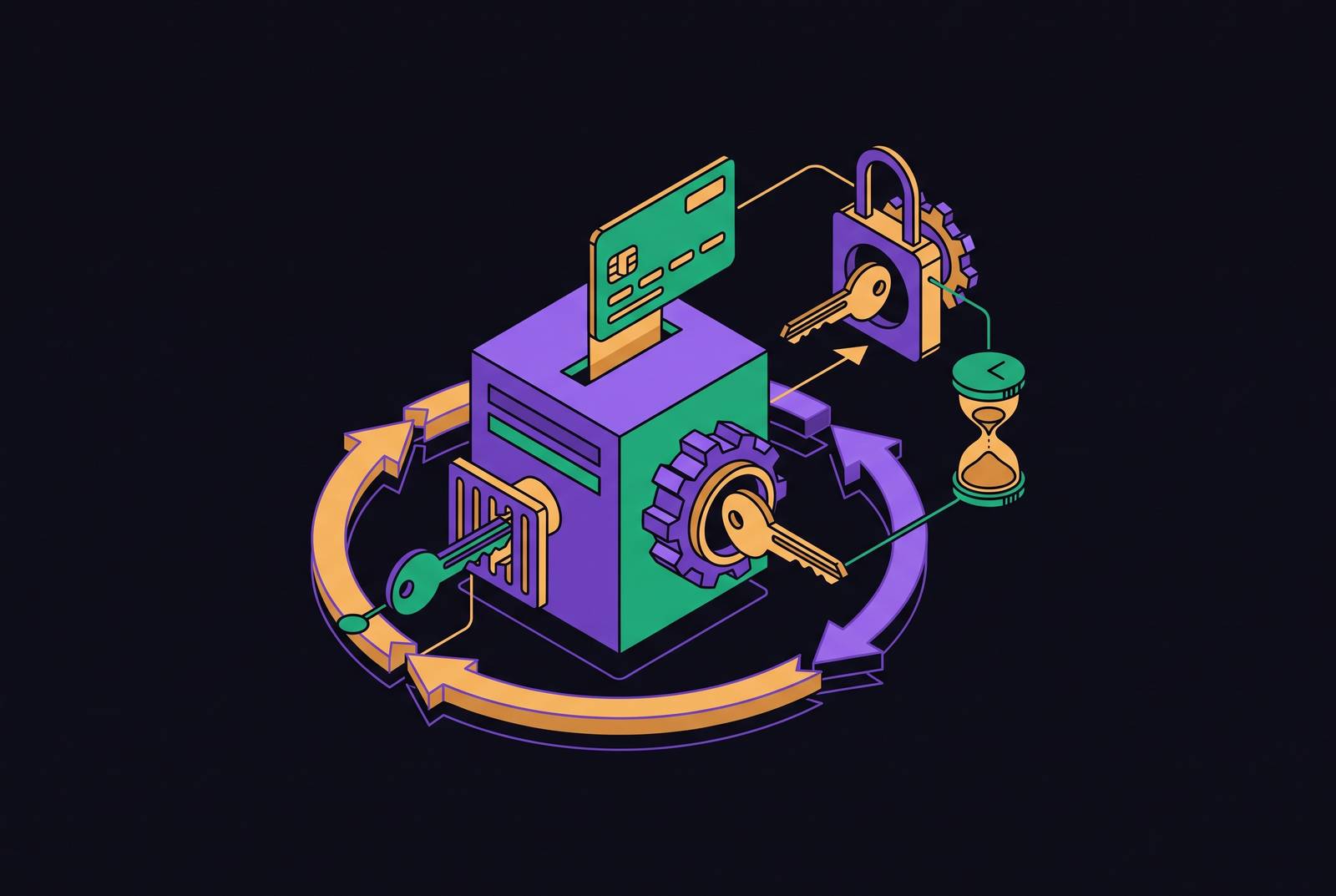
Credential rotation in a running MCP agent is not the same problem as rotating an API key in a stateless service. MCP's architecture creates long-lived sessions, persistent context, and stateful agents that can hold a secret long after it should have expired, and most rotation tooling built for REST or gRPC integrations was never designed to catch that. Closing the gap takes purpose-built practices at the runtime, gateway, and vault layers, plus a governance system that can see what every agent is actually touching.
Why MCP credentials behave differently from conventional API secrets
A normal API call follows a tight loop: a credential gets presented, the call runs, the credential is released. MCP breaks that loop. OWASP's MCP Top 10 classifies MCP as enabling long-lived sessions, stateful agents, and context persistence. A token handed to an agent at the start of a task doesn't just disappear when the task ends. It can sit in memory, get written into a log, or surface again later when a user prompt triggers a system recall that pulls old context back into view.
OWASP has a name for what happens next: contextual secret leakage. A credential meant to live for one call ends up stored somewhere nobody tracked, retrievable by anyone with access to the right log file or the right prompt. There's no real equivalent of this in a traditional REST or gRPC integration, where a credential's lifespan is bounded by the request itself.
A third structural shift makes the problem harder to reason about. The old initialize handshake and the Mcp-Session-Id header are gone. Every request now carries its own authorization, checked fresh each time. That's a meaningful security improvement on paper, but most agents running today were built before the revision, and they still assume a credential valid at the start of a session stays valid for the whole session. That assumption no longer matches how the protocol actually works.
How the static-secret default became the dominant deployment pattern
Static secrets became the default in MCP deployments for a straightforward reason: that's what the setup instructions told people to do. When the official path of least resistance is a hardcoded key, sprawl is the expected outcome.
The rotation mechanics that follow from this setup are just as rough. Rotation happens reactively instead, usually after something has already gone wrong.
The gap runs deeper at the transport layer. Aembit's analysis notes that MCP authorization is optional in the spec and only applies to HTTP-based transports. A large share of real-world MCP deployments, in other words, have no enforced authorization boundary to speak of. Combine that with configuration files full of long-lived keys, and static secrets stop looking like a shortcut and become the only practical option most teams have set up for themselves.
The exposure window that static secrets and long-lived sessions create together
Static secrets paired with long-lived sessions don't just create a theoretical risk. They've already produced real incidents, documented and disclosed.
The clearest case is Smithery.ai, disclosed in GitGuardian's State of Secrets Sprawl 2026. A single path traversal bug in the platform's Docker build process exposed an overprivileged fly.io authentication token. One leaked token, one skeleton key, thousands of downstream accounts at risk: that's the exposure pattern OWASP describes in its MCP01 entry, playing out in production.
OWASP's own attack scenario for MCP01 follows the same shape at smaller scale: an attacker with read access to debug logs containing raw MCP payloads pulls credentials straight out of those logs and uses them to push unauthorized code into production repositories. And the leakage vector isn't limited to accidents. Attackers can engineer context leakage on purpose, not just stumble into it.
What turns a single leak into a standing problem is how long the exposure lasts. GitGuardian's State of Secrets Sprawl 2026 found that a majority of secrets confirmed valid in 2022 were still exploitable as of January 2026. Rotation failure is the norm in MCP environments.
mecmcp issue #420, opened September 28, 2026, shows what this looks like from inside a real engineering team. Device credentials were static. An agent can be actively failing on authentication while every dashboard says it's fine.
Silent expiry and missing readiness signaling in in-flight rotation
Issuing a credential and storing it safely are the easy parts. The hard part is detecting and handling expiry gracefully while an agent is mid-task, with no clean stopping point to pause and refresh.
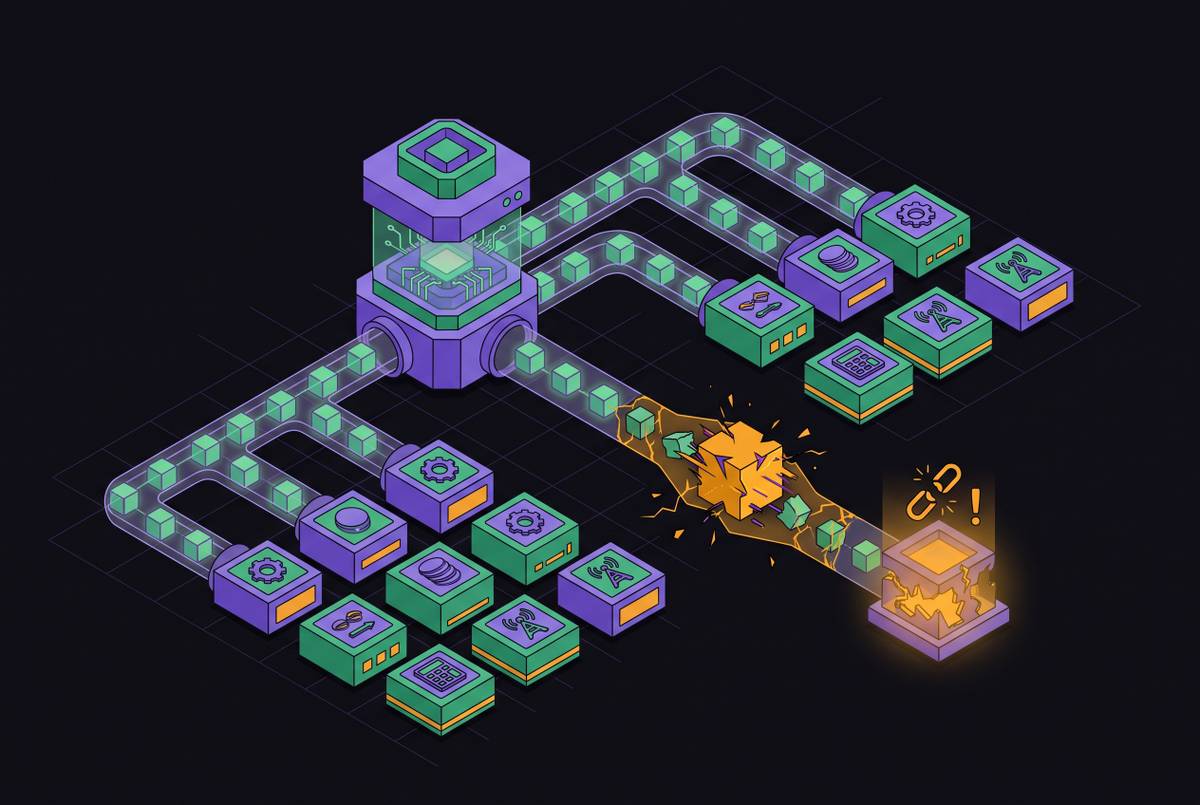
mecmcp issue #420 names the failure mode precisely: an expired or invalidated key raises only per-call errors, while readiness still reports healthy. So operators get a false-positive health signal at exactly the moment the system is silently failing on authentication. Nobody gets paged. Nothing turns red. The agent just keeps failing, call after call, while every monitor insists it's fine.
The revised spec makes this sharper, not softer. Aembit's analysis points out that authorization is now checked per-request instead of per-session, so a credential valid when the agent started its task carries no guarantee of being valid by the time a later call goes out. So the agent's authorization state can shift mid-execution in ways its own readiness surface was never built to reflect.
Context persistence compounds the problem further. Rotating a secret at the vault layer doesn't automatically propagate the change into an agent's in-flight context, so the rotation can succeed everywhere except the one place still using the old value.
Real-time visibility into which credentials each agent is actually using, and which ones have drifted or expired, closes the detection window that static-secret deployments leave wide open.
Rotation state ownership: agent runtime, gateway, and vault as enforcement layers
Every team running MCP agents in production eventually runs into the same architectural fork: not whether to rotate credentials, but which layer should own the rotation state. The answer shapes which failure modes stay on the table and which ones get closed off.
Letting the agent runtime hold and refresh its own credentials has one real advantage: the model gets direct visibility into its own authentication state. Credentials flowing through model context reopen the contextual leakage risk that OWASP's MCP01 entry names as the primary exposure vector. Putting the secret in the same place the model reasons and remembers things is asking for it to resurface somewhere unexpected.
Vault-based rotation, using dynamic secrets instead of static ones, takes a different approach. The Kubernetes short-lived credential design pattern shows how this works in practice: HashiCorp Vault, paired with Kubernetes auth, checks a pod's bound service account token against the live API server before issuing anything. Vault then issues a dynamic secret with a short TTL, and neither the agent nor the gateway ever holds a long-lived secret at rest.
Gateway-layer brokering sits between these two. A central broker holds the real credentials and hands out short-lived, scoped tokens for individual calls, so the underlying secret stays out of both the agent's context and the gateway's storage.
None of these three is a universal winner. Vault-backed dynamic secrets offer the strongest isolation but depend on surrounding infrastructure, Kubernetes, bound service account tokens, an external secrets operator or a CSI driver, all working correctly together. Gateway-layer brokering is more portable across environments but only holds up if the gateway stays the one authoritative checkpoint for every tool call an agent makes. What doesn't hold up well as a production default is handing rotation to the agent runtime itself, since that puts the secret right back in the place most likely to leak it.
Concrete practices for rotating secrets in running MCP agents without downtime
Rotating credentials in a live MCP agent means matching the technique to the layer the credential actually lives in. No single method covers vault, gateway, and runtime at once, and most production deployments need more than one of these running together.
At the infrastructure layer, vault-backed dynamic secrets rely on strong workload identity. The Kubernetes short-lived credential pattern uses bound service account tokens, audience-bound, object-bound, and time-bound, generally available since Kubernetes v1.22 and the default since v1.21, as the identity an external secrets manager checks against. That's a meaningful shift from authenticating with a shared platform credential that every pod carries. The design principle behind both paths is the same: scope the credential's lifetime to the task it's doing, not to how long the session happens to run.
At the gateway layer, per-call token brokering follows a similar logic. Neither the MCP server nor the gateway manages those credentials directly. AgentCore Identity's token vault holds them, and the gateway retrieves a scoped token from Identity at the moment a call needs one. Descope's analysis of the spec revision notes that token passthrough is now forbidden: each hop has to get its own fresh, audience-bound token through token exchange under RFC 8693, rather than forwarding the original user's token along the chain. That requirement makes per-call brokering not just a good idea, but the pattern the protocol itself expects.
For unattended agents acting without a human in the loop, signed JWT assertions following RFC 7523 offer an identity-layer alternative to long-lived API keys. The client signs a short-lived JWT with its own private key, naming itself in the iss and sub fields and the authorization server in the aud field. The authorization server checks the signature against the public key it already has on file. Aembit's analysis ties this to machine-to-machine access under the OAuth Client Credentials flow: the protocol alone can't prove which agent or runtime actually holds a given token. Verifiable workload identity still has to do that work.
At the operational layer, Doppler's credential guide describes a dual-credential rotation phase built for exactly this kind of handoff: both the old and new credentials stay valid during a transition window, and the old one only gets retired once everything has moved over to the new one. That window prevents the mid-flight authentication failures that a hard cutover would cause. Running production MCP servers with rolling updates and multiple replicas lets that restart happen without downtime.
None of this closes the readiness-signal gap described earlier. mecmcp issue #420, closed September 29 in PR #437, proposes the fix the ecosystem is still missing: expiry metadata attached to loaded secrets, a rotation hook, and a standard readiness check that actually fails when authentication fails, instead of reporting healthy while quietly breaking on every call.
Operator action items in the MCP authorization spec
The July 2026 MCP spec revision isn't a minor patch. It rewrites the authorization model in ways that leave session-scoped credential assumptions, baked into a lot of existing deployments, flatly out of step with how the protocol now works.
Aembit's September 2026 analysis lays out the central change: MCP no longer uses protocol-level sessions at all, and the old initialize handshake and the Mcp-Session-Id header are both gone. Each request stands on its own, carrying its own protocol version, client identity, and capabilities, with authorization attached to every single request instead of being set once at the start and reused from there.
Three authorization patterns sit inside this new framework. User-delegated access covers agents acting on behalf of a person, using Authorization Code with PKCE and a human approval step. Machine-to-machine access, through an OAuth Client Credentials extension, covers unattended agents that act on their own without a browser or a user present. Enterprise-managed access, through a separate extension, puts the organization in control of which servers and scopes are available.
Externalized authorization through providers like Okta or Auth0 is the model the spec expects instead.
Any team running agents built before this revision is carrying a gap worth taking seriously. If those agents still assume session-scoped credentials, they're out of step with how the current spec actually authorizes requests, and whatever rotation logic they have was built around a session model the protocol no longer recognizes. The fix is an audit of the authorization model itself, not just a tighter rotation schedule.
The governance layer that makes rotation sustainable at enterprise scale
Every technical practice covered so far works at the level of a single agent or a single credential. None of it holds up at scale without a governance layer sitting above it, tracking credential identity, enforcing lifecycle policy, and giving someone real-time visibility into what every agent is actually doing.
OWASP's MCP01 entry lays out what that governance layer needs to include: organizational policies for credential lifecycle management, regular audits of MCP configurations, server endpoints, and stored contexts, and the use of HSMs or secrets managers for injecting credentials at runtime.
A lot of this comes down to a registry problem. Every MCP server added without an entry in some central registry is a credential identity nobody is tracking. That's exactly the identity whose expiry goes unnoticed and whose rotation gets skipped, because nobody knew to look for it.
Role-based access control for agents isn't really about limiting what AI is allowed to do. An unscoped credential sitting in an MCP agent is the absence of that decision ever getting made.
Because an expired credential can leave an agent looking perfectly healthy while failing silently on every call, the real operational fix is continuous audit of what each agent actually touched, the kind of real-time access logging that governance-first platforms provide as a baseline, turning what used to be an after-incident postmortem into an active safety net.
OWASP's broader point about MCP holds the whole argument together: the impact of token mismanagement gets amplified specifically because these systems often operate autonomously. A leaked token can grant high-impact permissions with no human in the loop. Governance is what puts a human decision point back into that loop, before the token ever gets the chance to matter.