PIA vs DPIA Distinctions in Practice
Confusing PIA and DPIA in practice leaves organizations legally exposed.
Teams doing privacy work routinely say "PIA" and "DPIA" as if they're the same three steps in a different order, but they are not. The two instruments come from different legal roots, get triggered by different conditions, and demand different paperwork. The gap between them is where enforcement findings pile up, year after year.
The PIA took shape in the 1990s and 2000s across the US, Canada, Australia, and New Zealand as a voluntary way to manage privacy risk. No law forced anyone's hand. The DPIA came later and got written into law directly: GDPR Article 35 made it a specific legal obligation, not a suggestion, which is the root of the confusion. When a team sits down to run either assessment, the work on the page looks almost identical: describe what data moves where, figure out who could get hurt, write down how you'll stop that from happening. Anyone doing the work feels like they're doing the same thing twice under two different names.
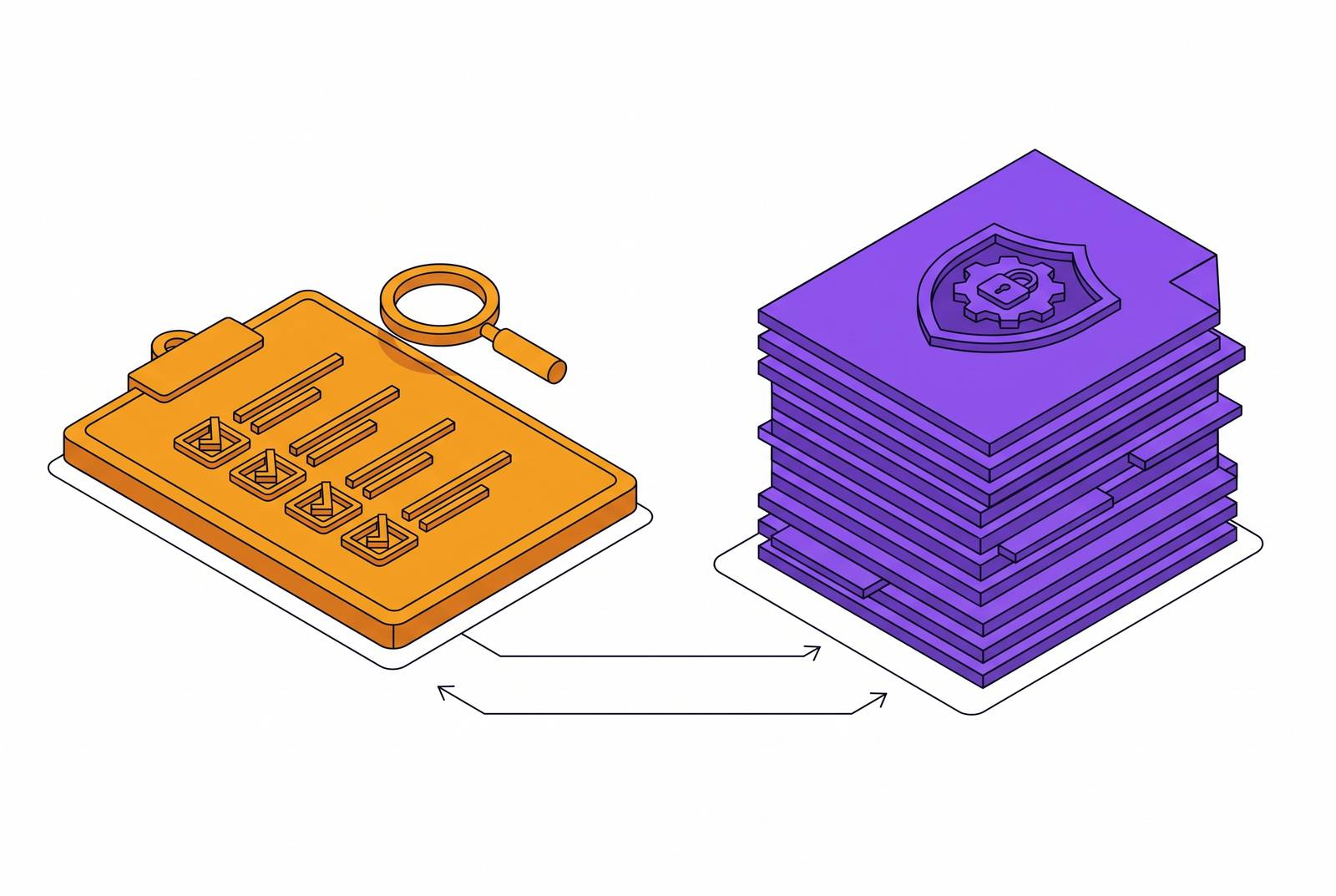
The relationship between the two is simple to state and easy to get wrong in practice: every DPIA is a kind of PIA, but not every PIA is a DPIA. The set isn't symmetric, and that asymmetry is where almost every mistake in this space originates. An organization runs a PIA-style review on a processing activity that actually required a DPIA by law. The documentation looks thorough. The review covers data flows, risks, mitigations, all of it. None of that satisfies the statutory obligation if the legally required elements aren't in there. The work resembles compliance without being compliance.
Instrument purpose and legal authority
A PIA's shape gets decided by whoever asks for it: an internal policy, an international standard, a state law. A DPIA's shape gets decided by statute. That difference in who holds the pen is the reason almost every other difference between the two instruments exists.
The PIA is built to flex. Its depth, format, and content shift depending on what an organization needs, what standard it's following (ISO/IEC 29134 is the common reference point), or what specific law happens to invoke it. Canada requires federal institutions to run PIAs under Treasury Board of Canada Secretariat policy, and some provinces extend that requirement to public bodies, but private companies under PIPEDA face no general obligation, even though many run PIAs anyway as sound practice. The US runs a similar split: federal agencies must complete PIAs under the E-Government Act of 2002 for systems that handle personal information, while private companies face no federal mandate, though California's updated CCPA rules now require risk assessments for processing that poses significant risk to consumer privacy. Australia recommends PIAs for government agencies. New Zealand doesn't mandate them under its 2020 Privacy Act, though the Office of the Privacy Commissioner recommends them broadly, and the Biometric Processing Privacy Code 2025 made PIAs mandatory specifically for biometric processing. No single law anywhere defines what a PIA must contain. The format belongs to whoever is running it.
The DPIA works differently. GDPR Article 35(7) spells out its minimum content. Article 35(2) requires involving a data protection officer. The regulation lays out what has to happen when risk remains high after mitigation. None of that is adjustable to taste. A DPIA isn't a best-practice template an organization can bend to fit its own process; it's a legal floor, and falling below it means falling out of compliance. Any organization handling EU residents' data, or based in the EU, carries this obligation automatically. There's no opting out of it.
That difference in where the authority comes from explains why a PIA can be excellent and still leave a legal hole. An organization can run a thorough, well-designed PIA that satisfies every best-practice standard going and still fail to meet GDPR's requirements, simply because the PIA skipped one of the specific elements the statute demands.
The triggers: what makes a DPIA legally required, versus what prompts a PIA
A DPIA doesn't get triggered by how cautious an organization feels on a given day. It's triggered by specific categories of processing that GDPR treats as presumptively high-risk, and getting that identification right is the first step that can't be skipped or softened.
A PIA, by contrast, gets triggered by almost anything: a new product launch, a system upgrade, bringing on a new vendor, a change in how data flows between systems. The threshold is set by whatever internal policy or external law happens to call for it, not by a fixed legal standard. That flexibility is one of the PIA's real strengths as a governance tool.
GDPR's DPIA triggers are narrower and specific. They include processing genetic data, identifying people through biometric data, tracking location, building AI and machine learning models, monitoring people systematically at scale, tracking children for marketing purposes, processing personal data not collected directly from the person it concerns, and large-scale processing of sensitive data or systematic profiling. Supervisory authorities in each country publish their own lists of processing types that automatically require a DPIA, and those national lists matter more in practice than the general language of Article 35 itself. A common and costly mistake happens when an organization runs a PIA on an activity that shows up on one of those mandatory lists, assuming the PIA covers the same ground. It might cover similar ground on paper. It still doesn't satisfy the legal requirement.
Timing is part of the trigger logic too. Article 35 requires the assessment before processing starts, and enforcement actions repeatedly cite organizations that began processing before the DPIA was finished. A PIA has no such constraint, it can be run at any point in a project's life, even after the fact, which makes it operationally convenient but useless as a stand-in for a DPIA's timing requirement. California's updated CCPA rules, in force January 2026, add a parallel structure worth watching: they require a risk assessment when processing poses "significant risk" to consumer privacy, with updates due within 45 calendar days of any material change. It isn't called a DPIA, but the trigger logic behind it looks a lot like one.
DPIA content requirements versus a PIA
Article 35(7) spells out four things a DPIA has to include, and none of them carry an equivalent mandate in a PIA. Each one is its own documentation obligation, and a flexible PIA process can skip any of them without anyone noticing until a regulator looks.
The four requirements, in the order Article 35(7) lists them: a systematic description of the processing and its purposes, including the legitimate interest the controller is pursuing where that applies; an assessment of whether the processing is necessary and proportionate to those purposes; an evaluation of the risks to the people whose data is involved; and the specific measures planned to address those risks, covering safeguards, security measures, and protection mechanisms.
A typical PIA covers three of those four reasonably well: description of processing, risk identification, mitigation measures. The necessity and proportionality assessment is the one PIAs tend to skip or handle thinly, and regulators repeatedly criticize this gap in enforcement decisions. It's a specifically legal analysis, not a general risk exercise, and treating it as an afterthought is one of the more common gaps between what a PIA delivers and what a DPIA requires.
DPO involvement works the same way. Article 35(2) requires the controller to seek the data protection officer's advice during the DPIA process, and the EDPB's WP248 guidelines go further, recommending that both the advice given and the controller's response to it get documented inside the DPIA itself. No PIA framework builds this in by default. It's a mandatory, documented step for a DPIA and an optional nicety everywhere else.
Supervisory authorities also reject generic or copy-paste risk write-ups that don't reflect the organization's actual data flows. The systematic description requirement means the DPIA has to describe the real processing happening, not a reusable template narrative. The same flexibility that makes a PIA so useful across a broad governance program is what makes it insufficient the moment it's asked to stand in for a legally mandated DPIA. The EDPB moved to close part of that gap on April 14, 2026, publishing its first harmonized DPIA template, giving organizations a reference structure that supervisory authorities will recognize when they review a submission.
The conflation between the two tools gets sharper, not simpler, once AI enters the picture. An organization training a model on customer records can run a flexible, well-documented PIA and walk away believing it has met its obligations, while the mandatory GDPR Article 35 elements, including documented governance over what the AI system can actually access, remain untouched. Platforms like MCPManager, built to centralize control over how AI systems reach data, can document that access as it happens, but only after an organization has correctly determined that a DPIA, not a PIA, was the legal requirement.
The prior consultation requirement: the procedural step that has no PIA equivalent
When a DPIA shows that high risk remains even after every mitigation has been applied, the controller has to go to the supervisory authority before processing starts. Nothing in any PIA framework imposes a pause like this, and it changes the relationship between finishing an assessment and actually launching a project.
Article 36 of GDPR lays out this prior consultation requirement directly: if a DPIA shows risk that can't be brought down to an acceptable level, the controller doesn't get to decide alone to move forward. The supervisory authority then has eight weeks to respond with written advice, and that window can stretch longer for complex cases, a timeline that has to get built into project planning from the start, not bolted on after the fact.
This isn't a formality that gets rubber-stamped. The authority can recommend halting the processing entirely or restructuring it, and its written response becomes part of the permanent compliance record. A PIA, no matter how carefully it's done, has no comparable checkpoint. The organization assesses the risk, writes it down, and moves forward on its own judgment. Prior consultation belongs to the DPIA regime alone.
Because a DPIA's required content is set by statute rather than left to organizational discretion, it has to include specific documentation of access controls and monitoring for any high-risk processing, something a general PIA framework often leaves vague. Organizations running AI systems against EU residents' data need their DPIA to spell out the governance layer controlling that access directly, not simply assert that access controls exist somewhere in the system.
A high-residual-risk DPIA is a live regulatory interaction that can halt a project, something a PIA has no mechanism to do. US federal PIAs run on the opposite logic entirely: they're generally made public as a transparency measure rather than submitted to a regulator for approval before anything starts. One model is a confidential internal document that can escalate to a regulator with the power to stop you. The other is a public disclosure with no such gate attached.
What happens when the DPIA obligation is missed
Failing to run a required DPIA is its own GDPR violation under Article 83(4), standing apart from any other finding. Enforcement history makes the point directly: completing a PIA that resembles a DPIA does not satisfy the obligation. The legal standard is the DPIA itself, not something that looks like it from a distance.
Article 83(4) sets fines of up to €10 million, or a percentage of the company's total worldwide turnover from the previous financial year, whichever number is larger. That penalty attaches specifically to the absence of a required DPIA, not to a general judgment that an organization managed risk badly. Supervisory authorities can also issue corrective orders that stop processing cold until a proper DPIA gets completed. The consequence isn't only financial. It can shut down a project in the middle of a launch.
Real cases show how this plays out. Spain's AEPD fined FC Barcelona over biometric identity checks rolled out for members without a compliant DPIA done beforehand. Sweden's IMY fined the Swedish Police Authority for using Clearview AI's facial recognition system to identify individuals, a move that broke Sweden's Criminal Data Act through unlawful biometric processing and the absence of the required impact assessment. The UK's ICO fined MediaLab, which operates Imgur, after finding no completed DPIA, no age verification for users, and no parental consent mechanism for children under thirteen, leaving them exposed to content they shouldn't have been able to reach.
Starting processing before the DPIA is finished remains the single most common finding across these cases. The regulation requires the assessment to happen before processing begins, and writing it up after the fact doesn't undo the violation. Generic, copy-paste risk assessments fare no better. Supervisory authorities reject them on sight once they recognize a template standing in for an assessment of real data flows. And the necessity and proportionality analysis keeps tripping organizations up in a specific way: failing to consider less intrusive alternatives to the processing in question is a recurring criticism, and it's an element with no standard PIA equivalent, often the exact gap that turns an otherwise solid assessment into a non-compliant one.
Many organizations assume a DPIA only applies during a model's training phase, but the regulation treats automated decision-making and large-scale processing of sensitive data categories as presumptively high-risk on an ongoing basis. An AI system's continuing access to and use of consumer data can itself trigger the DPIA requirement, long after training ends, and the organization has to document not just the original assessment but real-time visibility into what the system is actually touching, something a one-time, pre-deployment PIA was never built to track.
The global regulatory landscape beyond GDPR
GDPR set the pattern, but it's no longer the only regime drawing a hard line around mandatory risk assessments. California's updated CCPA regulations, in force January 2026, require a risk assessment wherever processing presents significant risk to consumer privacy, with updates due within 45 calendar days of any material change to that processing. The language is different from Article 35, but the underlying logic, a binding trigger tied to risk level rather than organizational preference, is the same shape GDPR already established.
New Zealand shows a parallel move at a smaller scale. Its Privacy Act 2020 doesn't mandate PIAs generally, and the Office of the Privacy Commissioner simply recommends them for projects touching personal information. But the Biometric Processing Privacy Code 2025 broke from that voluntary posture entirely, making PIAs mandatory specifically for biometric processing. That's the same move GDPR made years earlier applied to a narrower slice of processing activity, and it signals how quickly a voluntary framework can turn into a binding one once a specific technology (biometrics, in this case) starts drawing regulatory attention.
The EDPB's harmonized DPIA template, published April 14, 2026, points in the same direction from a different angle: toward less ambiguity about what a compliant assessment actually looks like, and less room for a well-meaning PIA to pass as a substitute. Taken together, these developments suggest the mandatory assessment surface is widening steadily, not just under GDPR but across jurisdictions that once left this work entirely to organizational discretion. Any company operating across borders, particularly one running AI systems against personal data in multiple regimes, is facing a narrowing gap between what's recommended and what's required, and the cost of mistaking one for the other is only getting clearer.
Sources
- PIA vs DPIA: What’s the difference and which do you need?
- Part One: Global Assessments Across CCPA and GDPR: Core Requirements and a Practical Approach to Processing and Drafting Global Assessments - California Lawyers Association
- What triggers a DPIA under the GDPR
- Data Protection Impact Assessment: When and How to Run One — GC AI
- Privacy Impact Assessment - General Data Protection Regulation (GDPR)
- Accountability on the ground Part II: Data Protection Impact Assessments &
- Prior consultation