Centralizing MCP Access Policy Enforcement Without Fragmenting It Across Individual Servers
A centralized gateway enforces consistent MCP access policy across all servers and teams.
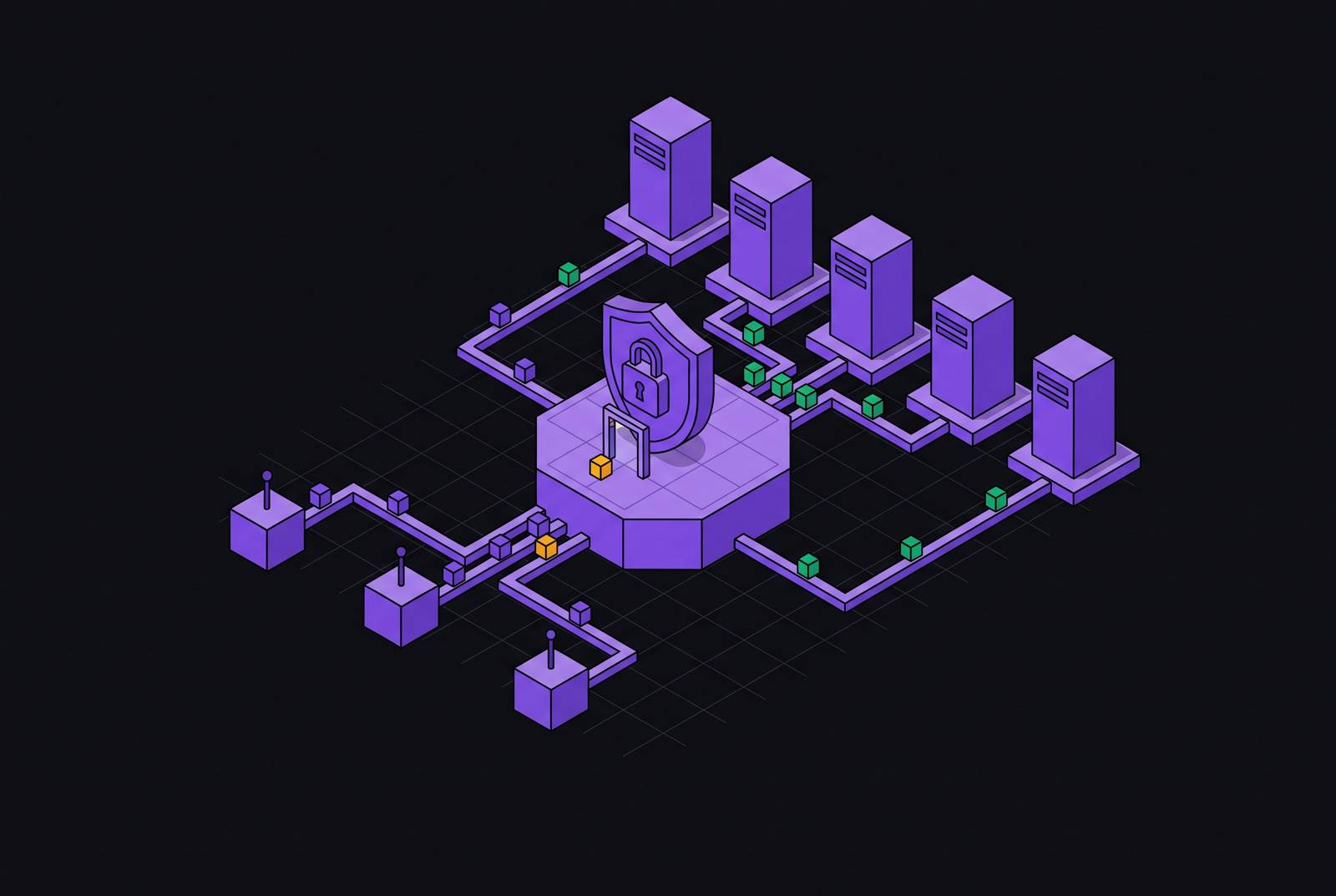
Enterprises need an MCP gateway with built-in role-based access control and observability so that the same tool permissions hold across teams and servers. MCP standardizes connectivity but leaves security to deployments, so adding controls server by server produces separate policy boundaries. A centralized gateway lets teams share access control and audit logging as infrastructure, while other controls deal with threats beyond MCP traffic.
Why MCP deliberately leaves security to individual deployments
MCP was designed for interoperability, standardizing how AI models communicate with external tools. Authentication, authorization, and access control remain deployment responsibilities because the protocol does not enforce security at the protocol level.
A shared connection standard therefore does not establish who may use a tool or under what conditions. Those decisions fall to the teams deploying servers and the security teams supporting them. Connectivity can be consistent while permissions are not. When the protocol leaves those decisions open, each server fills the gap with its own controls, assumptions, and defaults.
How per-server security produces fragmentation at scale
Traditional API calls are command-based and fairly easy to predict, while MCP agents work from intent and can make requests in an unexpected order. A workflow may pass through several servers and cross the boundary of a single service. Local controls see only part of that sequence. Under deadline pressure, teams naturally secure the server they are deploying, but that default path produces fragmentation structurally, even when each team does competent work.
Identity is where the split becomes concrete. The end user, AI host, MCP client, MCP server, and downstream APIs each have a separate identity context. Without shared enforcement, a server may use the client's trust level, a shared service account, or cached credentials as a proxy for the user's actual permissions. The request can proceed under the wrong authority. A permission that looks reasonable at one boundary can therefore grant too much access across the full workflow.
Credentials fragment in the same way as policy. Without a central store, API keys live in environment variables, OAuth tokens sit in configuration files, and long-lived secrets accumulate across deployments. Rotation means searching across all the servers. Teams have to keep each secret safe and find every place where it can still be used when access needs to change.
What the attack surface looks like when servers are ungoverned
Oligo Security's disclosure of CVE-2025-49596 describes arbitrary command execution through unauthenticated MCP Inspector instances. Exploitation required a victim to visit a malicious website, rather than an attacker simply connecting directly to an exposed instance. The vulnerability had a CVSS score of 9.4. It shows how a missing authentication boundary around development tooling can expose both the developer's machine and the data behind a tool.
Securing the Model Context Protocol (MCP) Risks, Controls, and Governance describes content-injection attackers who put malicious instructions inside data that is otherwise legitimate and supply-chain attackers who share compromised servers. Tool poisoning can put those instructions in a tool's name, description, or input schema before execution. A definition that appeared legitimate can later be modified or substituted, so an access decision made once cannot settle whether subsequent interactions are safe.
Credential exposure and local execution widen the consequences. An ungoverned server holding API keys can expose access to downstream services, while a compromised local stdio server can provide a foothold for privilege escalation on its host. These are distinct gaps. Authentication addresses access, tool validation addresses poisoned definitions, and isolation constrains compromised code, but separately governed servers provide no common assurance that those controls cover the whole workflow.
Why retrofitting controls onto individual servers cannot solve a coordination problem
Better security on each server produces better-secured silos unless policy and visibility are also coordinated. A financial services team ran into this split when one group used local stdio servers and another used hand-rolled HTTP wrappers. Neither could answer the CISO's question about which tools agents were calling or who had authorized access. The missing answer crossed both teams' boundaries. Improving either wrapper alone would not have supplied it.
An individual server can record its own execution, but it cannot see what happened before or after that step elsewhere. This limits its ability to track an agent's identity, scope, and behavior across a workflow. The MCP security paper proposes provenance tracking, inline policy enforcement, and centralized governance through private registries or gateway layers. Those controls require a view beyond one server. More detailed local logs can help investigations, but they do not themselves create that shared view.
Authorization wrappers added opportunistically protect whichever servers have received attention, while other deployments remain outside the same policy. Even when authorization wrappers are added carefully, new deployments need to use a control point that is already in place to keep policy consistent, so the gateway lets teams coordinate security without rebuilding it for each server.
How enterprises control which AI agents can access which MCP tools
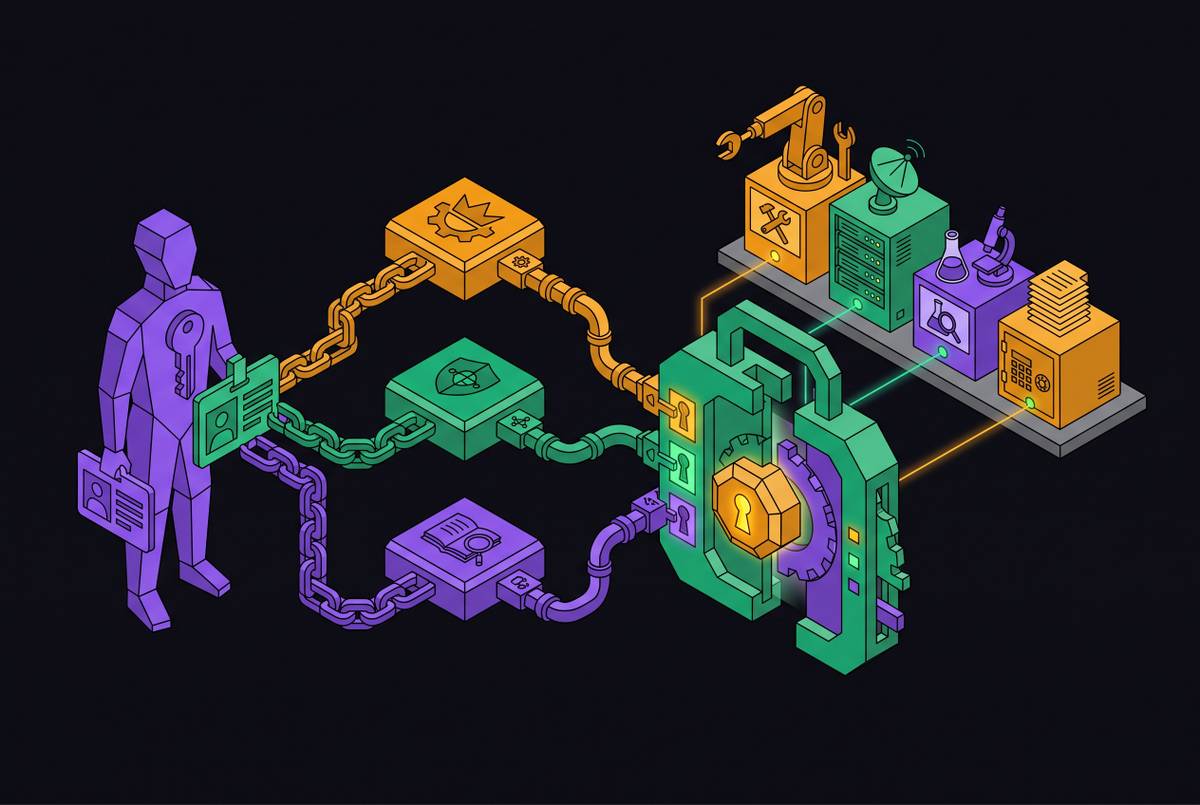
A centralized gateway separates policy from individual server deployments by placing agent-to-tool traffic behind one enforcement layer. At initialization, authentication establishes the principal whose permissions will govern access, while allowlisting limits connections to approved MCP servers. Identity is attached to the caller. This gives a central platform team a place to enforce access policy without requiring every tool author to build an independent authorization system.
During capability discovery, filtering limits what the agent can see. When an agent calls tools/list, the gateway returns only authorized tools, with discovery policy also restricting access to resources and prompts. The upstream server does not need a separate deployment for every role. With role-based access control, teams can set permissions once for all servers, so each server uses the same rules for a role.
At tool invocation, the gateway applies policy and inspects the call before it reaches its destination. Scoped authorization ties the decision to the authenticated principal, while shared logging supports a record across the MCP workflow. Rate limiting, analytics, and cost attribution can use that same identity. Revocation also gains a common boundary. Revoking a gateway key cuts off access to every MCP proxy that key could reach on the next request, without rotating upstream credentials or waiting for separate servers to catch up.
Gateway process supervision can bring stdio servers together and make them available through an authenticated HTTP service, so tool authors can use stdio without building authentication or infrastructure themselves. That changes where access controls are enforced. Sandboxing, input and output checks, data loss prevention, and anomaly detection complement this boundary, while gateway logging supplies the shared record needed to follow calls across governed servers.
How existing gateway implementations put this architecture into production
Amazon Bedrock AgentCore Gateway provides a concrete example of authorization before execution. Teams write rules in Cedar to control which tools a principal may invoke, including conditions based on tool inputs. Enforcement happens at the gateway boundary before the call reaches its destination. This is more specific than a broad promise of secure access. It lets an enterprise evaluate whether policy can distinguish the caller, the requested tool, and the inputs relevant to an authorization decision.
IBM ContextForge represents the open-source route. Its Python-based architecture uses FastAPI and Uvicorn, with higher baseline latency than Go-native alternatives. Operational ownership is part of the comparison. Teams that run an open-source gateway have to handle patching, scaling, and failover, while managed alternatives take on that work. The choice therefore concerns both the enforcement model and who will keep that model available in production.
For an enterprise buyer, the relevant comparison includes policy detail, role-filtered discovery, authenticated identity, revocation, audit visibility, latency, and operating responsibility. The available evidence does not establish feature parity between these implementations. Cedar authorization demonstrates one capability, while ContextForge's architecture establishes a different deployment and ownership trade-off. Neither fact alone shows that role-based access control and observability cover everything they need to. The MCP security paper also notes that NIST AI RMF and ISO/IEC 42001 do not yet cover MCP threats in detail, so a general AI governance framework cannot substitute for examining these concrete controls.
The strongest objection to gateway-first enforcement and what it actually applies to
The strongest objection is that a gateway repeats the mistake of perimeter security. Agents can act through MCP, shell commands, native SDKs, database connections, and framework-specific tools. An MCP gateway cannot govern those separate paths simply because it governs MCP traffic. Treating it as complete agent security would confuse control over one channel with control over every action.
That objection correctly defines the scope, but it does not remove the need to govern the channel. A gateway belongs within layered controls covering authentication and authorization, transport security, tool validation, credential management, and continuous monitoring in SIEM. The gateway enforces access and logging at the MCP boundary. It does not replace every other layer, and inspection at that boundary should not be mistaken for a guarantee against malicious instructions expressed in natural language. To deal with semantic attacks, teams need behavioral analysis and context-aware controls as well as signature matching.
Latency is another real cost. Published figures range from tens of milliseconds per request on managed platforms to sub-millisecond overhead on Go-native routing implementations. That is generally low relative to model inference time, but high-frequency agentic loops make repeated overhead relevant. Availability needs equal attention. Architects should plan redundancy and failover so that a shared enforcement layer does not become a single point of failure.
The case for a gateway is therefore conditional and precise. MCP traffic must pass through it for its policies and logs to provide consistent coverage, and other agent channels still need their own controls. Within that boundary, however, centralized enforcement remains the necessary foundation for making MCP access an organizational decision rather than the accidental result of local configurations.
What centralized enforcement makes possible that per-server governance cannot
With the enforcement layer in place, a new MCP server can enter an existing access model instead of triggering another authorization redesign. Security review can confirm that the deployment fits established controls. This changes the pace of adoption. A central platform team can own shared policy enforcement and audit logging while development teams focus on the tools they need to deliver.
An agent that receives only the tools it is entitled to use has less noise to navigate and a more predictable set of possible actions. A convenient approved path can also reduce the incentive for shadow deployments, including local stdio servers, undocumented HTTP wrappers, and unregistered integrations. Blocking adoption without providing that path leaves the underlying demand untouched.
Shared observability changes what the organization can know during execution. Where all governed MCP traffic converges, teams can see what an agent touched as it happens instead of reconstructing the sequence from separate server logs after an incident. The registry also assigns each admitted server an accounted-for identity. Unregistered access becomes a visible anomaly. These capabilities depend on the coverage of the enforcement layer.
The organizational advantage follows from that shared foundation. Teams that treat MCP governance as infrastructure can approve and extend production use without accumulating a separate access model for every integration. Teams that plan to secure it later face remediation work across a growing set of deployments. Gateway-first enforcement leaves some agent risks in place, but it requires deployments to follow the same MCP policy, so agentic AI can reach production faster and with less remediation debt.
Sources
- Streamlined policy administration of model context protocol servers for artificial intelligence agents
- Securing the Model Context Protocol (MCP): Risks, Controls, and Governance
- Proxy-based secure model context protocol server access for artificial intelligence agents
- Ensuring model context protocol server integrity for artificial intelligence agents
- Containerized execution of secure model context protocol servers for artificial intelligence agents