NIST SP 800-171 Controls for AI Agent Access to CUI
Organizations must map AI agent identities and actions to NIST 800-171 controls for assessment.
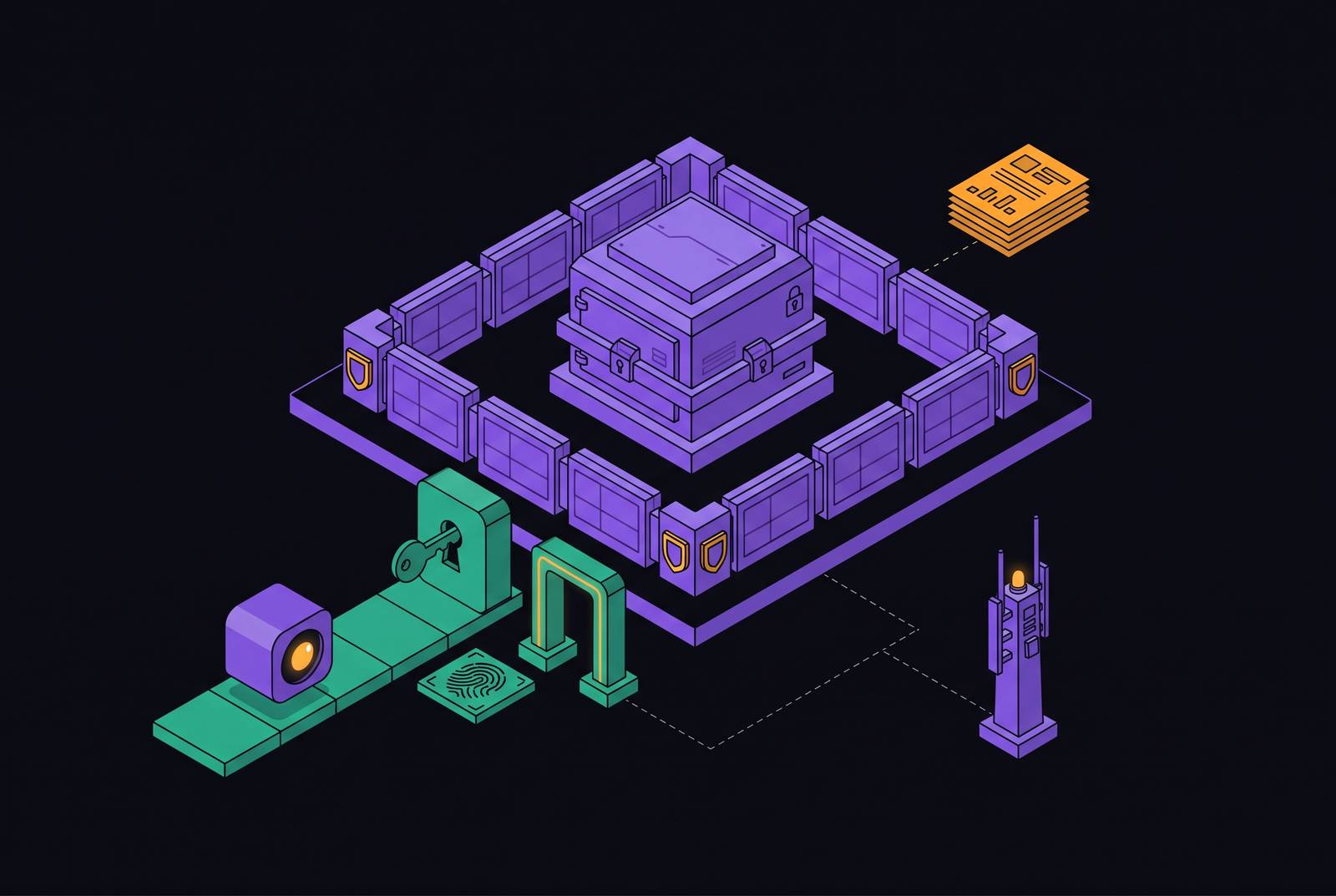
AI agents that access controlled unclassified information, or CUI, need to be in the System Security Plan. NIST SP 800-171 already covers their access. The practical gap is that controls documented for human users often do not govern what agents do at runtime. To close that gap, the organization must map agent identities, actions, data flows, and vendors to controls an assessor can test.
Why AI agents fall inside the 800-171 boundary without any change to the standard
NIST SP 800-171 applies to systems that process, store, or transmit CUI, without distinguishing human-operated systems from machine-operated ones. Its 110-practice framework gives AI agents no exemption. Revision 3 is final, but the solicitation and contract clauses that apply set the requirements a contractor must meet. DFARS 252.204-7012 also reaches service providers whose infrastructure processes CUI, including processing during model inference. An agent that works on proposals, technical documentation, contract administration, or supply chain tasks is thus within the compliance scope when it touches CUI. An SSP that omits that workflow has an implementation and documentation gap.
What makes AI agents structurally different from the human users 800-171 was written around
An agent pursues a goal, chains tools, retries actions, and discovers data or access paths as the task develops. Static role-based access control, or RBAC, assigns permissions before that activity begins, so it may not account for the combinations of actions the agent attempts. Broad permissions make it easier to finish the task but break least privilege. Narrow permissions can instead interrupt a workflow when it encounters a task outside its authorization, exposing a mismatch between the approved job and its implementation.
Delegation makes that mismatch harder to track and govern. When one agent hands work to another, the control system needs to distinguish the initiating agent, the executing agent, and the data exchanged between them. Neither agent should get the permissions of the person who deployed it just because that person did so. Each needs its own credentials, authorization boundaries, and session management, with access tied to the task and its current conditions. These architectural differences create harder implementation requirements.
Access Control (3.1) — where static RBAC meets dynamic tool chaining
Practices 3.1.1, 3.1.2, and 3.1.3 govern who may access CUI, which functions they may perform, and where that information may flow. An AI agent is a process acting on behalf of a user and must be explicitly accounted for. Authorization must cover more than the agent’s role because tool chaining can cross an approved transaction boundary even when each action on its own seems to be permitted. The destination is a separate control question. Permission to read CUI does not authorize sending it to an external API or infrastructure outside the approved boundary.
Attribute-based access control, or ABAC, can evaluate the data’s sensitivity, the operation, the task, and current risk before allowing an action. That gives authorization a runtime checkpoint. Policy-as-code engines such as OPA or Cedar can use those conditions to keep the agent within an approved objective. This makes the policy testable through the agent’s actual behavior, including whether an unauthorized data flow is blocked. The SSP’s access control section must describe which agent identities are authorized, under what conditions, and how those restrictions are technically enforced.
Identification and Authentication (3.5) — why shared API keys are an identity failure, not a shortcut
Practice 3.5.1 requires identification of users, devices, and processes, including agents, within the identification and authentication control family. Authenticating the human user does not establish the agent’s identity. If the application then calls a model through a shared organizational API key, the model request identifies only the organization. The identity chain breaks at the outbound request. That is precisely where an assembled context window may leave the CUI environment, so the access decision needs the end-user or agent identity.
Cryptographic workload identity gives the agent its own credential, linked to the human operator accountable for the workflow. The implementation direction is specific and task-bound. Just-in-time provisioning issues short-lived credentials for the approved task window and expires them when the task ends. Runtime policy checks then control file access, API calls, and output writes, while audit records keep the chain from the human operator to the agent identity to the CUI access event. Without that binding, later logs cannot reliably show who took each action just because the application logged a successful human login.
Audit and Accountability (3.3) — what a compliant AI audit trail must actually capture
Practices 3.3.1 and 3.3.2 require records detailed enough to make actions attributable to specific identities. A login record cannot explain an agent workflow. The trail must capture the agent, its accountable human operator, the specific CUI accessed, the operation, and the timestamp, including relevant prompt inputs, tool calls, and model outputs. Because a workflow can generate many actions in seconds, endpoint names alone do not explain the task context behind those actions. Where agents delegate, the record must also show who initiated the action, who executed it, and what data passed between them.
The application being audited must not control its evidence. Application-controlled logging can omit selected events, permit later changes by the same system that failed, or lose a record if the application crashes between the model response and the log commit. An externally written, signed log addresses those failure modes by separating the record from the caller’s control. This independence must be designed into the audit system before deployment.
The agent ran for roughly two months before the issue was identified, and Accenture did not initially report the incident to the government within the 72-hour DFARS window. The case makes the visibility gap concrete. If an audit trail misses agent actions, the organization lacks the record it needs in time to detect activity and report it.
System and Communications Protection (3.13) — commercial model endpoints as unenumerated external interfaces
An outbound model API call is an external interface under the boundary protection requirements. Older boundary diagrams may omit that interface entirely. Revision 3 treats a commercial model endpoint outside the assessed boundary as an external system, so traffic to it must be enumerated, controlled, and inspected. Destination-aware routing with an allowlist lets a request reach an approved endpoint or fail closed, and reconciliation checks the logs of where requests went against the approved inventory. When model output feeds an automated process inside the CUI environment, it must also be inspected and checked against policy as external input before it reaches the next system.
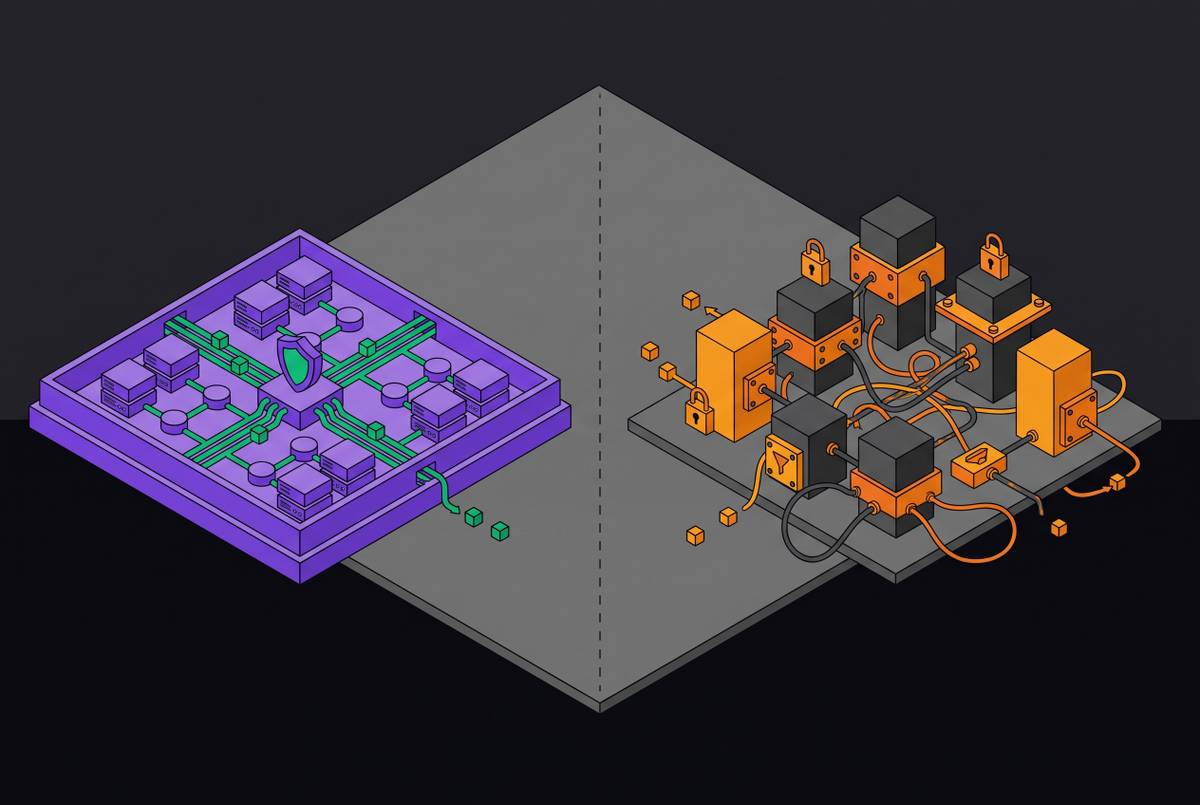
With commercial multi-tenant SaaS, a government cloud or sovereign variant, and in-boundary self-hosted inference, processing takes place in different environments. Under DFARS 252.204-7012, an external cloud provider processing, storing, or transmitting CUI must meet security requirements equivalent to the FedRAMP Moderate baseline at minimum, and the contractor bears responsibility for that determination. Full FedRAMP Authorization provides a Marketplace listing, while self-attested Equivalency does not provide the same evidence. Where contract terms require confirmed authorization, the two are not interchangeable. A model brand alone cannot show whether the way it is deployed meets those requirements.
Risk Assessment (3.11) and Configuration Management (3.4) — the two families that surface the SSP scoping failure
A risk assessment that predates agent access cannot account for the agent’s vulnerabilities, vendor dependencies, access scope, and governing controls. Practice 3.11.1 makes that omission assessable. The GSA OIG audit found CUI improperly shared in Google Drive with employees and contractors who lacked a legitimate business reason. It also found incomplete annual reviews of the tool’s search terms and the omission of many relevant terms from agency guidance. The case illustrates why documented controls need to be accompanied by a current review of actual access and data discovery.
Under 3.4, agents, model endpoints, and MCP servers need to appear in the component inventory so their access paths are accounted for. The Schemata case illustrates the access risk around poorly governed endpoints, without establishing that an inventory omission caused it. API endpoints lacking meaningful authorization checks exposed user records and military training materials across tenants to an ordinary low-privilege account, including materials marked confidential. Schemata acknowledged that the affected endpoints were exposed as of May 1, 2026, after a 150-day disclosure process. Together, current risk assessment and component inventory make it possible to describe the workflow and its controls accurately in the SSP.
What a complete SSP entry for an AI agent CUI workflow must include
For a compliance officer assembling the entry, the working check starts with agent identity registration and authorization scope. Each agent or workflow needs a component entry that names it, a record of its own credentials, authorization boundaries, and a human operator who is accountable for it. The authorization description must name the CUI categories it may access, the approved task conditions, and the runtime enforcement mechanism. A role label alone is not enough. The entry needs to explain what the agent may reach, when access is allowed, and what prevents it from exceeding that permission.
Deployment evidence must show each external model endpoint’s pattern and FedRAMP status, along with the work the contractor did to verify them. A Marketplace listing and a documented equivalency assessment are different evidence, so the entry must state which supports the deployment. The audit specification must define the recorded identities, CUI, operations, timestamps, tool calls, prompt inputs, and outputs, plus protection against modification by the logged system. For vendors whose infrastructure processes CUI, the entry must record the required DFARS flow-down.
The organization should start by mapping where CUI moves through the workflow. Unmapped access paths cannot be governed reliably. Next comes classifying the deployment pattern and examining the authorization evidence for each external provider. The organization can then implement the ABAC policy, workload identity, audit pipeline, and boundary allowlist, recording how each works in the SSP. Updating the risk assessment for the deployment and its vendor dependencies completes the sequence, so the plan describes operating controls.
Why the False Claims Act exposure and 72-hour reporting window make the documentation gap a legal risk, not just a compliance finding
A self-attestation becomes a legal risk when it asserts compliance that the deployed workflow does not meet. If agents send CUI to services that lack the authorization or equivalency evidence required by the contract, an omitted SSP entry does not erase the underlying failure. DFARS contractual non-compliance can create potential False Claims Act exposure when paired with an unsupported compliance assertion. The finding is no longer merely incomplete paperwork. It concerns what the organization represented about the systems actually handling government information.
The 72-hour DFARS reporting window makes timely detection and a usable record operational necessities. An audit log reconstructed after an incident cannot replace the required record of agent activity. Nor does the existence of login logs establish that the organization could see the CUI access events that needed attention. Identity, event capture, and reporting therefore have to function as connected controls.
The same controls also make compliant adoption faster. Governed access paths let organizations approve production workflows that ungoverned access would force them to block or delay. A complete SSP records deliberate decisions about what agents may do, while runtime enforcement makes those decisions real. Governance and deployment speed are the same operational problem.