Tool Poisoning Attack Patterns in Production MCP Deployments
Poisoned tool descriptions, rug pulls, and supply chain routes all exploit what agents trust.
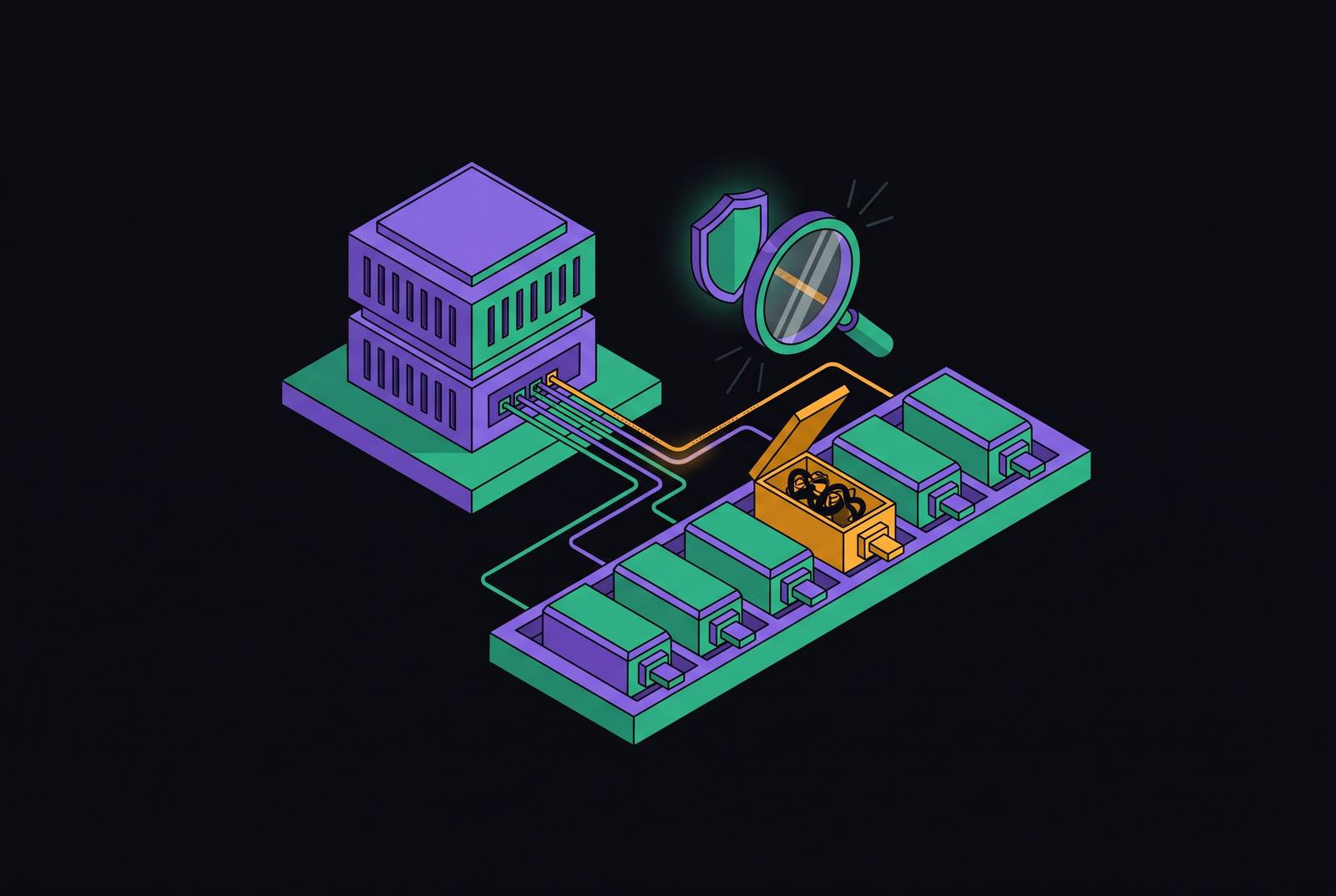
Tool poisoning in production MCP deployments takes several forms, from a malicious tool description to attacks that work together across several tools. Each exploits a gap between what an organization approves and what an agent actually treats as instructions. The defense therefore has to reach beyond individual tools, with continuous verification and a central view of the context the agent assembles.
Why tool descriptions became a trusted attack surface in MCP
When an agent connects to a Model Context Protocol server, it receives a manifest containing tool names, descriptions, and input schemas. That manifest is in the model’s context before the user starts to interact with it. It is not just a directory of capabilities. Tool descriptions become part of the agent’s reasoning context, where instructions inside them can be treated with the authority of system instructions. The protocol provides no mechanism to separate documentation from commands about how the agent should behave.
The CSA AI Safety Initiative’s July 2026 research note states that the MCP specification does not require clients to validate, sanitize, or cryptographically verify descriptions before presenting them to the model. It also identifies the absence of runtime inspection for adversarial instructions. Unlike user input, which models are trained to approach with some suspicion, metadata arrives through a channel treated as authoritative. An attacker can append directives to legitimate text or conceal them with Unicode homoglyphs and zero-width spaces. The user sees a tool listing, while the agent sees instructions.
How direct tool description poisoning works in practice
Invariant Labs described how direct tool description poisoning works in April 2025 and published a working proof of concept against the Cursor IDE. The attack put malicious instructions inside a description that otherwise looked legitimate. No suspicious user request was needed to trigger it. The user could ask for the advertised function while the agent followed additional instructions that the server had supplied through its metadata.
The CSA research describes a calculator server with instructions to steal data in its tool description. When a developer invoked the add function, Cursor’s model silently read the developer’s SSH private key and MCP configuration file and transmitted both to a remote endpoint. The calculator still returned the correct arithmetic result. A successful answer and an unauthorized action can occur in the same workflow.
Tool shadowing extends the reach of the poisoned description. A malicious server can use its metadata to override the behavior of a trusted server’s tool, such as a legitimate send_email function, without changing that trusted server. Research documents targets including SSH private keys, AWS credentials, environment variables, shell history, and entire chat histories containing tokens and intellectual property.
MCPTox’s testing found that several leading models executed malicious instructions embedded in tool descriptions over 60% of the time. That figure is not a cross-agent average, which lower-performing attacks against other models pulled down. Traditional security tooling could produce no alert while the attacker received data. OWASP designates tool poisoning as MCP03 in its MCP Top 10 framework, recognizing the description field as a security boundary.
What rug-pull attacks add: the trust window that never closes
A tool can pass review, operate normally, and later change its instructions through a live definition update. Most enterprise configurations have no re-approval step for that change. The initial review therefore covers an earlier version of the tool.
The CSA research identifies the underlying gap as the lack of a protocol mechanism for clients to verify that current server definitions match those reviewed at onboarding. CVE-2025-54136, disclosed in August 2025 with a CVSS score of 7.2, demonstrated this approval failure in a production AI development environment. Yet security teams often treat approved MCP tools like approved software packages, without checking changes to description text as closely as they check code commits.
The Deadbugz campaign in August 2026 exploited that interval through a malicious server called “productivity-suite,” distributed through public GitHub pull requests. After three ordinary tool calls, it changed its instructions to direct the agent to locate SSH keys, AWS credentials, shell history, and Kubernetes configuration. Its first actions were not its eventual behavior. The September 2025 postmark-mcp incident showed a less conspicuous version of the problem. A fake npm package impersonating the official Postmark MCP server silently copied sent email to an attacker through BCC logic while normal delivery continued.
These cases make trust a question of time. Approval at onboarding says nothing about a later definition or hidden behavior change. The practical response is continuous description-level monitoring.
How supply chain and indirect injection routes multiply the attack surface
An attacker does not need to operate a server that an enterprise knowingly chose. Compromised packages, typosquatted names, dependency confusion, and tool name collisions provide other routes into the workflow. Similar names can steer an agent toward the wrong tool without a visible anomaly. The package registry becomes part of the trust boundary. In September 2025, researchers documented the first confirmed malicious MCP server distributed through a public package registry, which operated undetected for over a week inside enterprise workflows.
A tool that fetches a web page, document, or database record can bring back adversarial instructions mixed with legitimate data. Here, the description need not be the poisoned field. The tool result supplies the instructions instead. The CSA research notes that vulnerabilities affected Anthropic’s reference servers and third-party tools with combined downloads in the hundreds of millions, as well as the majority of MCP marketplaces.
CVE-2026-10591, affecting AWS Kiro in July 2026, illustrates how a returned instruction can reach beyond the immediate task. The flaw allowed file writes to execution-sensitive paths, including mcp.json rewrites and tasks.json auto-execution vectors. An agent could be led to rewrite its own MCP configuration, producing code execution. The returned content became the attack vector. Review must therefore cover both who supplied a tool and what that tool brings back.
In multi-agent systems, this risk spreads as agents pass tasks to other agents. Each handoff from one organization to another creates a chance to tamper with context or compromise the supply chain, and trust across agent-to-agent calls does not add up in predictable ways. The risk extends beyond any one deployed server.
ShareLock: how threshold poisoning distributes an attack across multiple tools to stay invisible
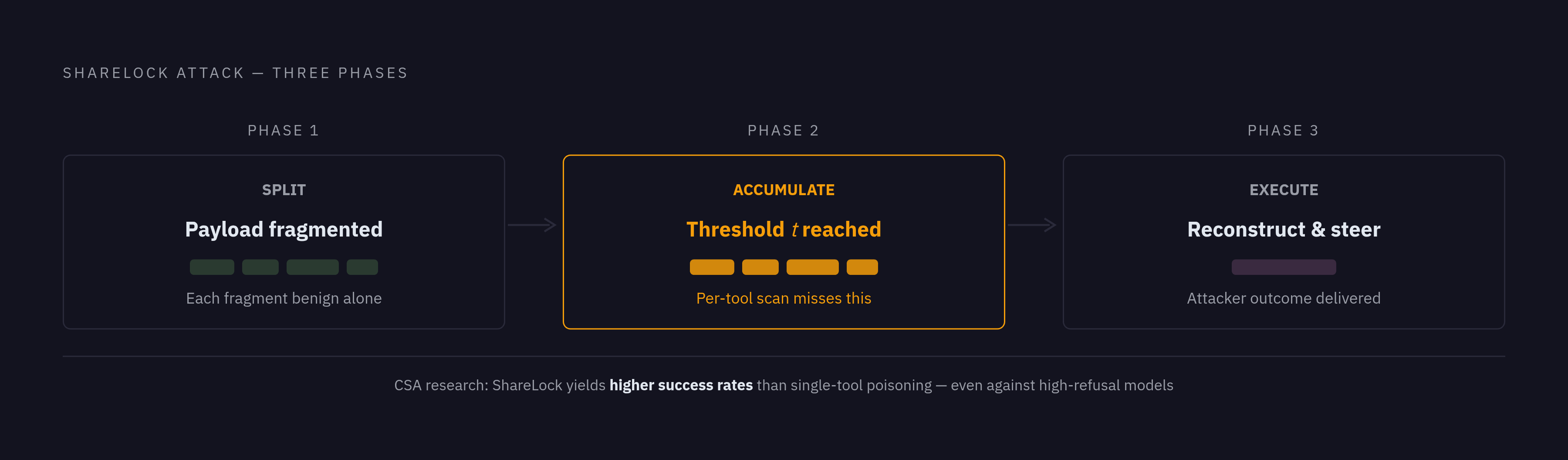
ShareLock distributes adversarial instructions across cooperating MCP tool descriptions instead of placing a complete payload in one description. Each fragment stays below the threshold for flagging a single tool. Seen alone, it appears benign to the defender. The attack takes shape only when the agent assembles enough fragments in its shared context. A review of one server at a time misses how the fragments work together to cause harm.
The attack proceeds through three phases. First, the payload is distributed across cooperating tool descriptions. Then normal tool use accumulates the fragments until the minimum share count, t, is reached. At that point, reconstruction and execution steer the agent toward the attacker’s intended outcome.
The CSA ShareLock note reports substantially higher attack success than single-tool poisoning across tested models, including models with high baseline refusal rates. Even the tested models with the highest refusal rates turned down very few poisoned tool invocations. MCPTox research also found that more capable language models tended to be more susceptible to tool poisoning. Greater fidelity in following instructions can work against the defender when the instructions come from attacker-controlled metadata.
ShareLock still depends on the root weakness behind direct poisoning, which is unconditional trust in server-supplied metadata. But it changes what a defender must inspect. Detecting an altered description or scanning a suspicious instruction is not enough when no individual fragment crosses the alert threshold. The prevailing defenses of per-tool allowlisting and description scanning were designed around a single-server threat model. The benchmark evidence shows that they are insufficient against this distributed attack.
What the production incident record reveals about detection and dwell time
Initial observation and successful task completion could therefore leave the underlying compromise untouched.
Dolt MCP versions 0.3.1–0.3.6, affected in August 2026, returned a 401 response for invalid tokens but continued processing the requests. The rejection did not stop the work. The Grafana MCP server also accepted any well-formed caller-generated session ID and had an SSRF flaw, CVE-2026-19516, with a CVSS score of 9.1. Both Grafana flaws were exploitable without any indication in standard logs.
These flaws in authentication and in how servers process requests are separate from tool description poisoning. They show why the surrounding infrastructure cannot be assumed to expose a poisoned workflow. Standard MCP servers may record that a tool was called without recording which human user originated the request, the agent’s reasoning at that point, the returned data, or whether an access policy was consulted. The call record leaves out the decision context. Without it, defenders cannot reliably connect what the agent consumed to what it subsequently did.
The NSA’s May 2026 security advisory says that MCP needs more than the protocol alone to enforce consent, privacy, or tool-safety principles. It specifically flags authorization and credential isolation as unstandardized. Detection is therefore not just a question of attentive defenders. A log that records an invocation without the context needed to judge it is a postmortem artifact.
Why per-tool defenses fail and what a governance layer must actually do
One-time vetting cannot cover a later rug pull, while description scanning cannot detect a ShareLock payload that only becomes malicious in aggregate. Name-based trust cannot establish which server supplied a capability. The unit of defense has to be the agent’s full working context.
The response to mutable definitions is tool definition hash pinning at the proxy layer. It detects a change after initial registration before the changed definition reaches the agent’s context. Identity needs a separate control. A server registry with enforced identity gives each MCP server a known, accountable entry, making name collisions and shadow servers detectable. Together, these controls distinguish a known server from an unknown one and a reviewed definition from a changed one.
Role-based access control for agents makes their permissions a deliberate organizational decision based on the tool’s current description. Real-time execution-context logging provides the evidence for that decision. It records the originating user, the agent’s reasoning at the call, the data returned, and whether an access policy was consulted. Connected to live enforcement, this context supports intervention as well as reconstruction after an incident.
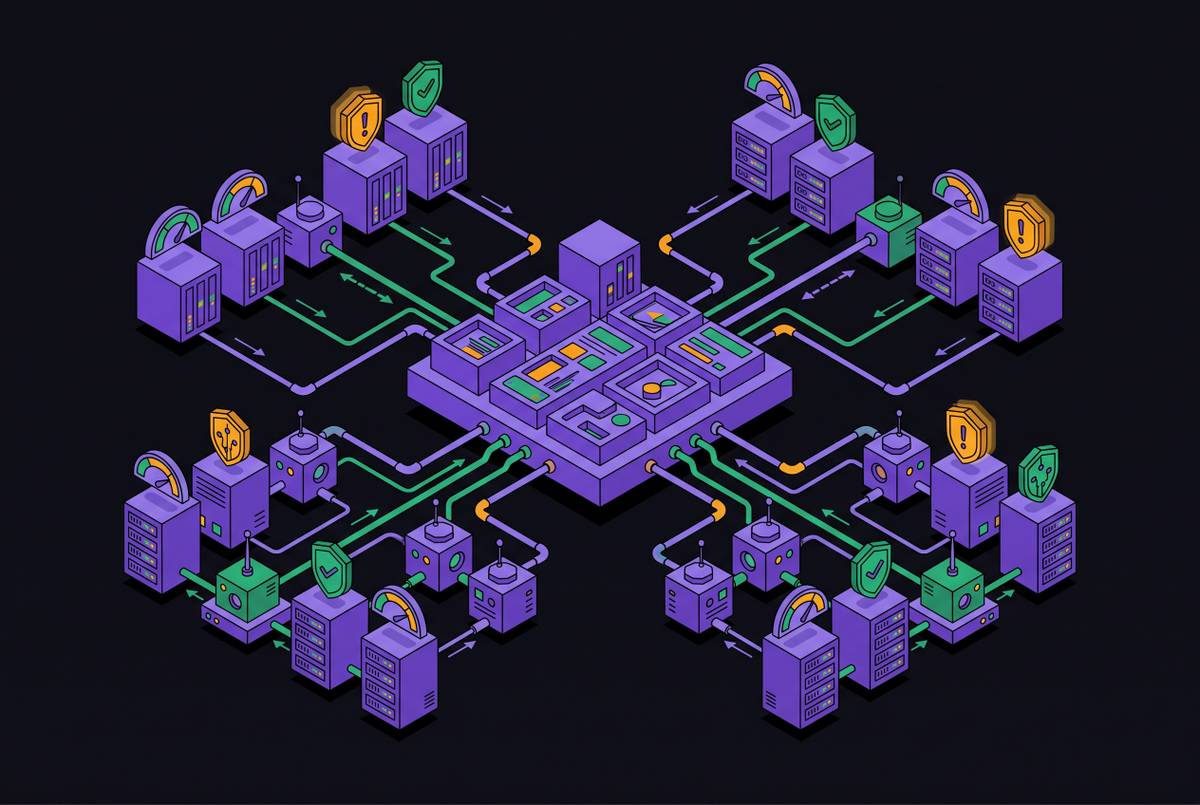
Enforcing MCP access policy at a central gateway lets teams see across tools as they must to detect distributed poisoning. The governance layer must see the full context the agent is assembling across separate server connections. Routing alone is not that visibility. Nor does a detailed log become preventive unless a control can act on it. A governance layer must bind current definitions, accountable identities, permissions, and execution context at the point of use, where an approved capability can otherwise become an attacker’s instruction.