MCP Threat Model for Multi-Agent Logistics Deployments
Authentication can't secure the chain from tool response to shipment.
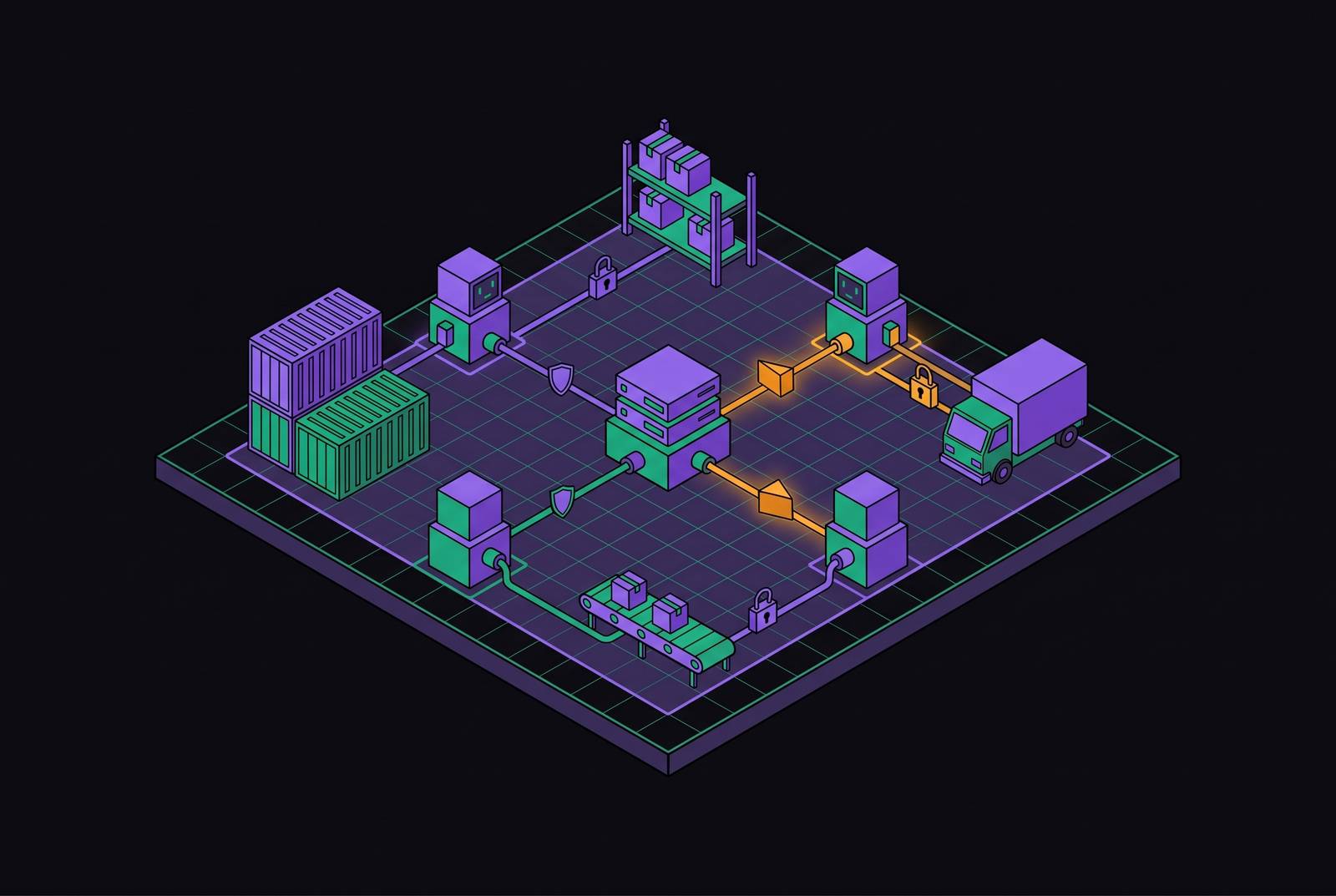
A threat model for multi-agent logistics deployments must cover more than MCP connections. It must cover the chain of decisions that turns a tool response into a purchase order, inventory update, or shipment. Authentication alone cannot secure that chain. Logistics needs controls at the transport, tool, coordination, and identity layers, with a governed server inventory that makes those controls enforceable.
Why logistics is not a generic MCP deployment
A logistics operator’s MCP deployment is an autonomous supply chain actor. Its connections to WMS, ERP, carrier APIs, inventory ledgers, 3PL partner portals, and customs-clearance systems let it change operations. Those systems issue purchase orders, trigger carrier pickups, and authorize customs declarations. An incorrect action can have a physical consequence that cannot simply be undone.
Anthropic introduced MCP in November 2024 to connect LLM-based agents to external tools. Vulcan Research’s March 2026 MCP-38 report explains that tool selection and invocation depend on free-form natural-language descriptions interpreted at inference time. A session can use dozens of servers as agents pass context from one task to the next. Even when each connection passes authentication, the chain of decisions may go beyond its authorized purpose.
The architectural layers a logistics MCP deployment exposes
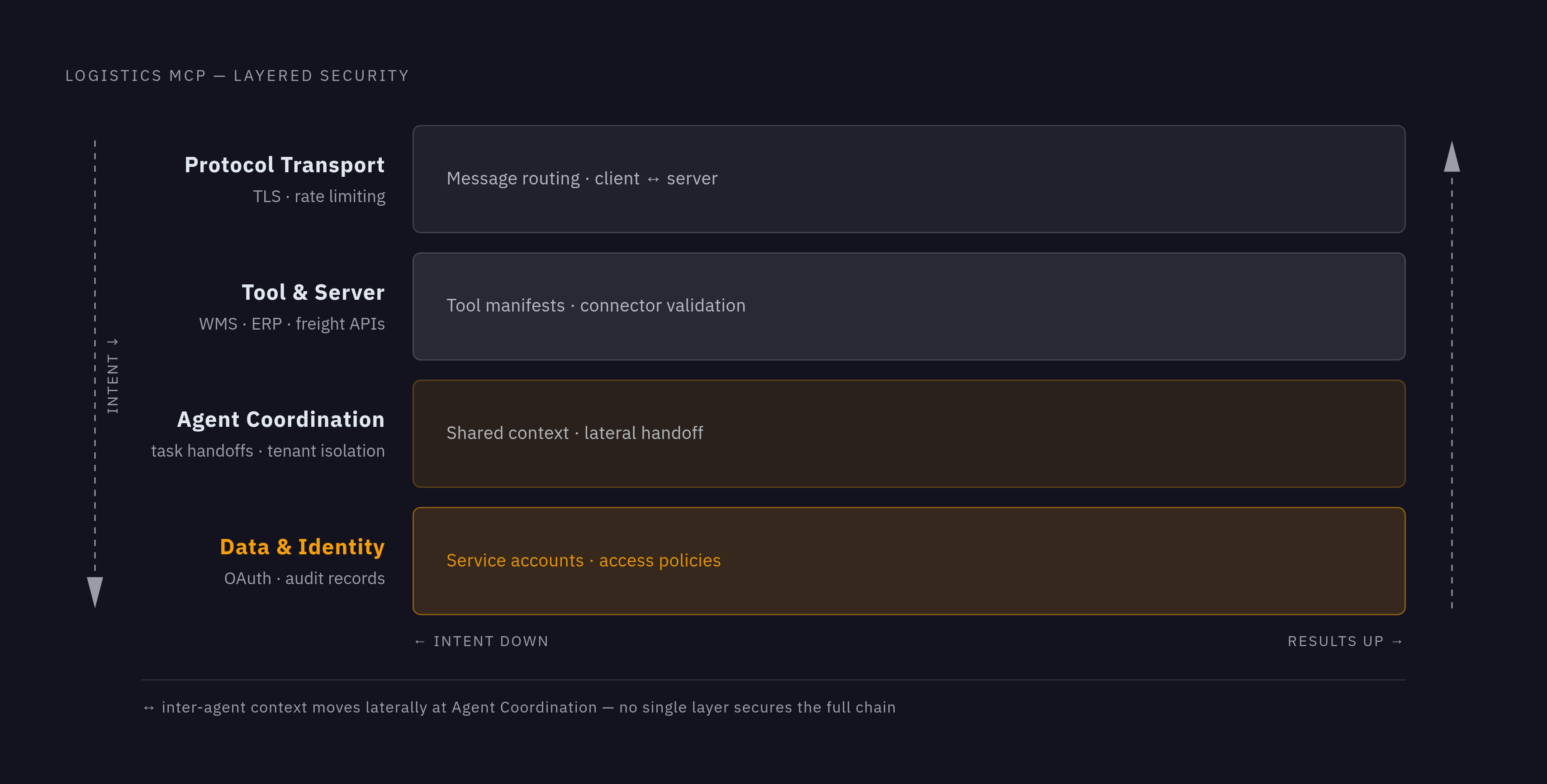
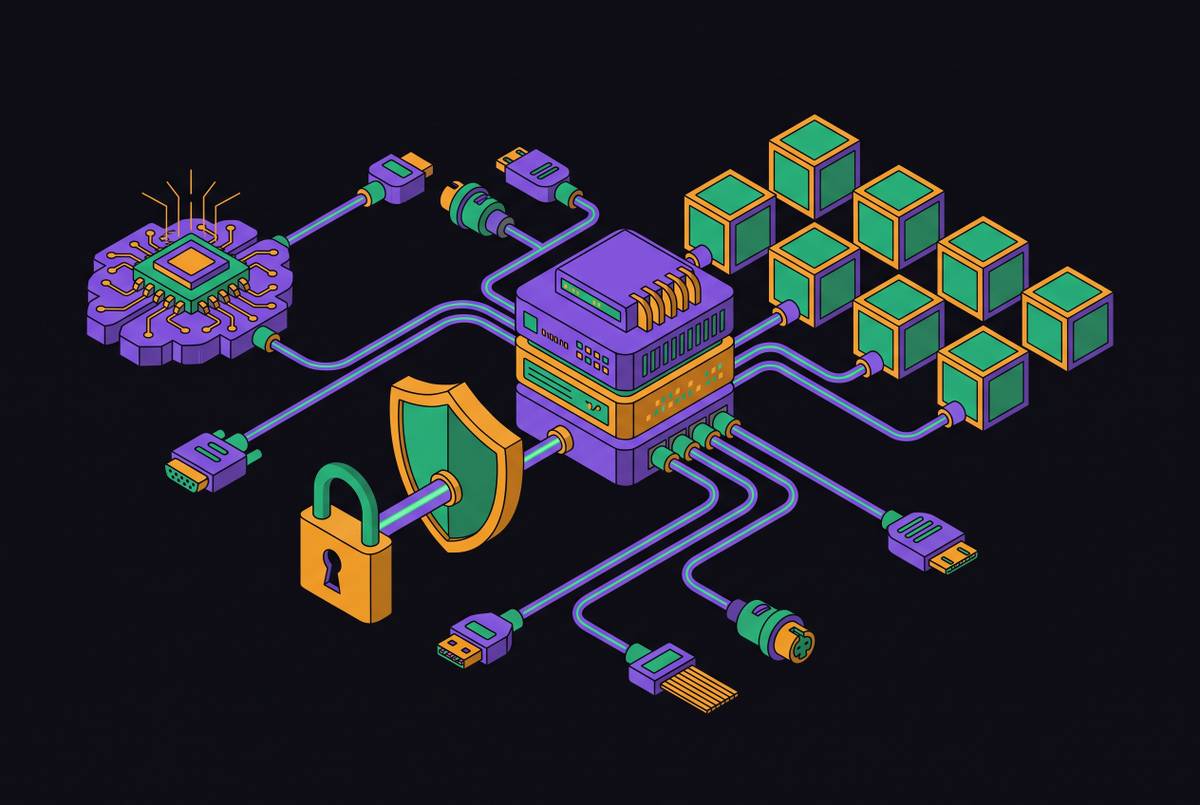
The deployment has four layers with different responsibilities. The protocol transport layer moves messages between clients and servers. The tool-and-server layer exposes WMS connectors, ERP integrations, freight-quote APIs, and other tools through manifests the model reads. The agent coordination layer handles task handoffs and the context that agents share. The data and identity layer holds service accounts, OAuth tokens, data classifications, access policies, and audit records.
Picture the agents above the tools, with transport connecting them and identity and data controls beneath the operations they perform. User intent flows down toward tool execution. Tool results flow back up to the agents, while inter-agent context moves laterally between specialists. Each layer sees a different part of the transaction.
The NSA’s May 2026 Cybersecurity Information Sheet describes a transport layer without protocol-mandated authentication or rate limiting, with authorization optional. Implementations therefore supply their own protections. MCP-38 looked at tool discovery, invocation, transport selection, and multi-server routing to arrive at its 38 threat categories. Logistics deployments use all of these together.
How tool poisoning and schema poisoning compromise the tool-and-server layer
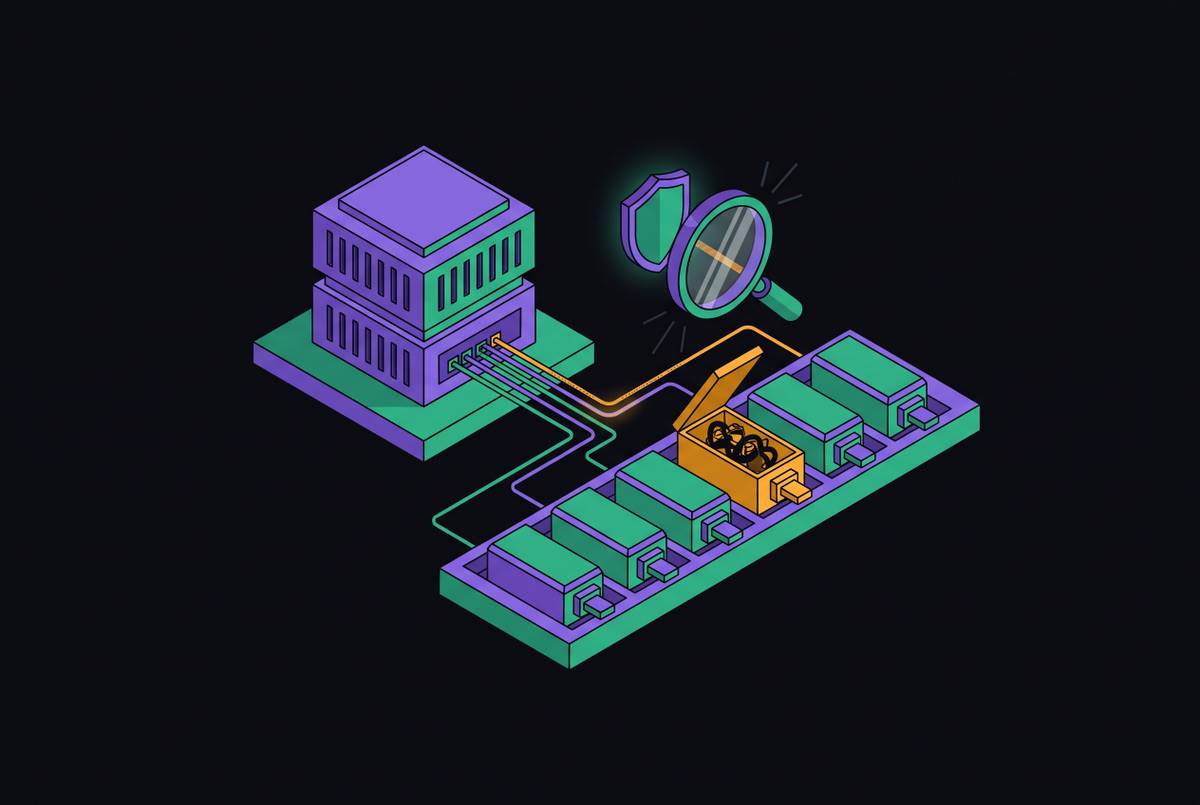
Consider a compromised freight-quote MCP server connected beside a trusted ERP connector. Its tool description could instruct the agent to reinterpret the ERP tool, redirect queries, suppress audit events, or disclose trade-route and pricing data while still returning a plausible quote. The quote is not the whole transaction. The description has become an instruction source, and its influence can extend beyond the tool it describes.
MCP-38 describes how attacker-controlled text can change what an agent does without changing application code. Tool poisoning targets the agent when it selects a tool. Schema poisoning instead targets input schema fields, using adversarial entries to induce unvalidated inputs to downstream systems. In logistics, those inputs can reach WMS or carrier APIs as instructions that look legitimate. Downstream access controls still have a role, but they cannot make the agent’s earlier interpretation trustworthy.
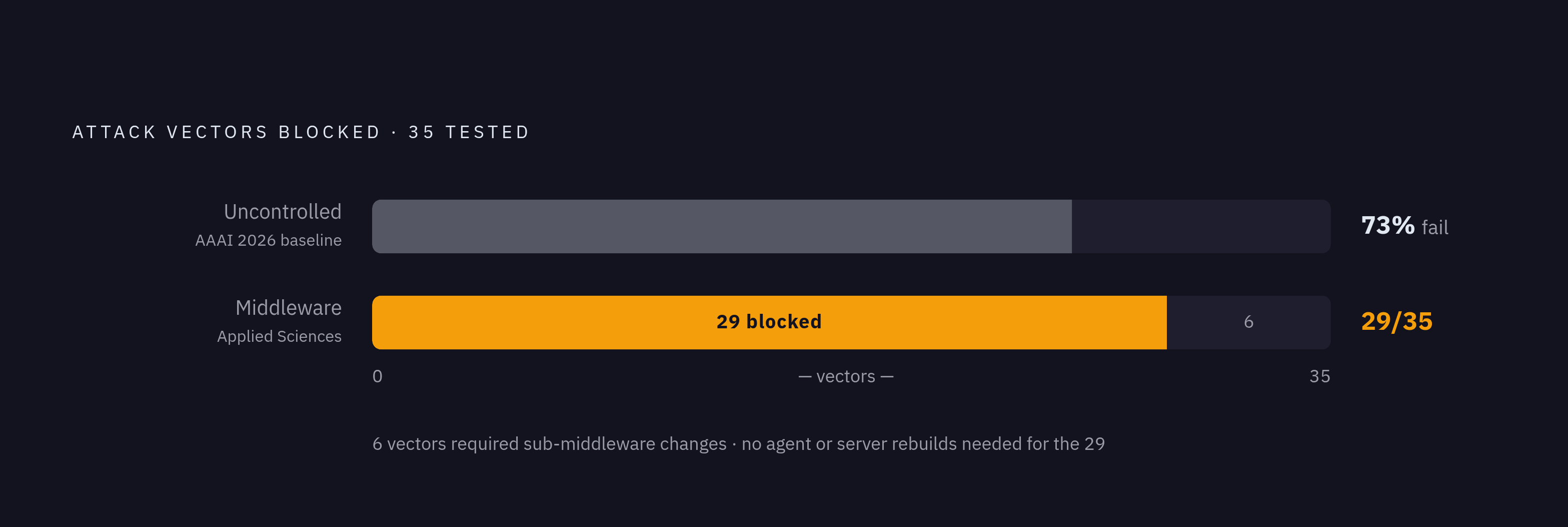
AAAI 2026 research found that malicious MCP tool-response payloads shifted model outputs toward policy-violating completions with a mean attack success rate of 73% of attempts. The NSA sheet also identifies unconstrained inputs reaching execution environments, while patched vulnerabilities CVE-2026-30623 in LiteLLM and CVE-2026-30615 in Windsurf illustrate production exposure. The control at this boundary is a tool registration validator. The August 2026 Applied Sciences framework, which used that control, blocked every attack instance tested across 600 test executions and let all legitimate calls through.
How cross-server tool shadowing enables lateral movement across logistics connectors
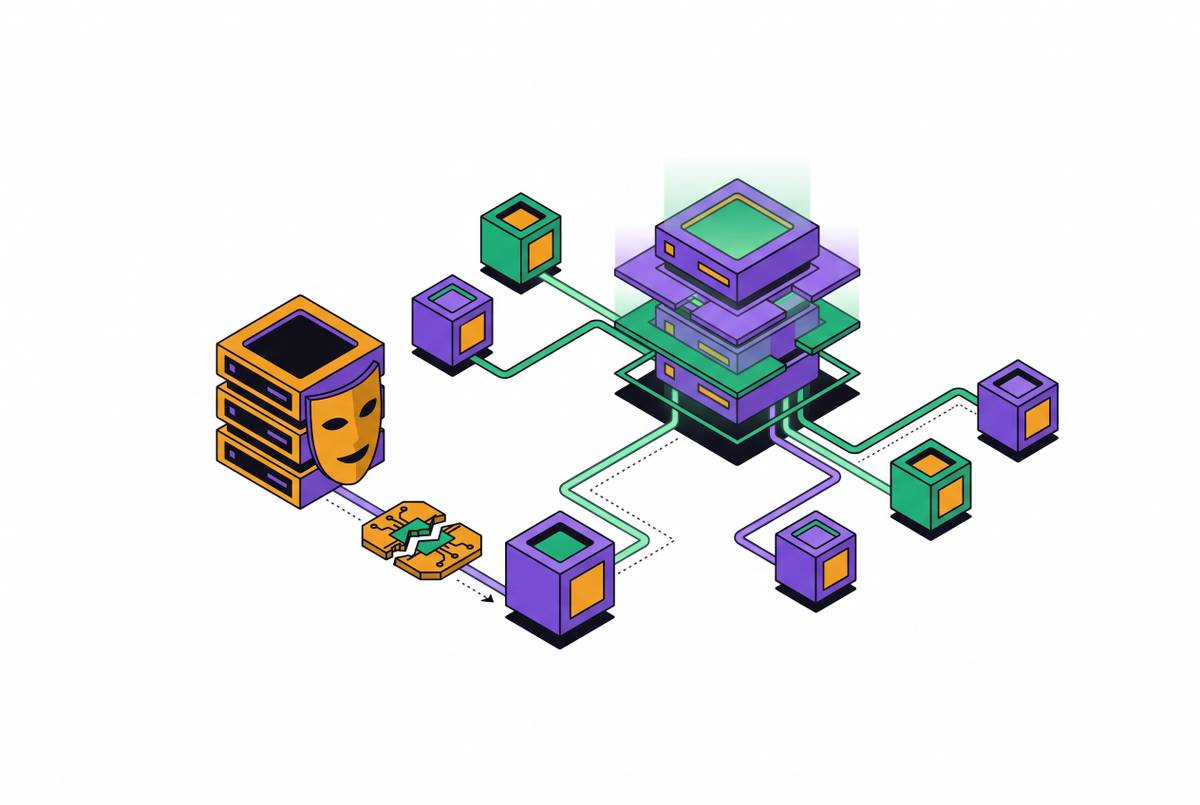
Tool poisoning can spread further when servers share an agent session. A malicious server can supply descriptions that distort how the agent understands adjacent trusted tools. A logistics chain might run from a carrier API through an ERP connector and inventory ledger to a customs-clearance system. Each call can look legitimate in isolation. The combined sequence can nevertheless exceed the purpose of the original authorization, spreading the reach of one compromised connector across procurement and fulfillment.
Aonan Guan’s April 2026 “Comment and Control” research, conducted with Johns Hopkins collaborators Zhengyu Liu and Gavin Zhong, demonstrated a related path through ordinary task context. Malicious instructions in GitHub PR titles, issue bodies, and HTML comments hijacked Claude Code, Gemini CLI, and GitHub Copilot. The agents exfiltrated GitHub Actions secrets through GitHub comments or commits. No external infrastructure was needed for the attack.
OX Security’s April 2026 disclosure found a flaw in the architecture across the system that left an estimated 200,000 instances vulnerable. For logistics deployments, the corresponding controls are enforced per-agent tool allowlists and a centralized MCP gateway. These give security teams an inventory of active servers and a defined set of tools each agent may invoke, rather than treating every connection in a session as equally available.
How implicit inter-agent trust and context sharing create attack paths at the coordination layer
A demand-forecasting agent can hand work to a replenishment agent, which passes it to a carrier-selection agent that authorizes a shipment. Each handoff crosses a trust boundary. If the receiving agent treats the previous output as authoritative without validation, a compromised agent can influence the rest of the pipeline.
Kennesaw State University’s A2A+MCP integration analysis describes compounded risks when inter-agent discovery and communication meet MCP tool execution. An agent discovered through A2A can present itself as trusted while using MCP tools with accumulated authorization. Injected content can influence decisions many calls after its introduction, when its original source is no longer apparent. This is context poisoning, where compromised content actively steers later work.
Context leakage is a different failure and needs a different boundary. A 3PL serving multiple shippers can expose one shipper’s routes, prices, or carrier relationships to another if shared context is not strictly tenant-scoped. No malicious instruction is necessary for that exposure. The coordination controls address these risks through tenant and session isolation and explicit input and output validation at every handoff. The Applied Sciences framework validated agent inputs and outputs before results entered shared context, placing inspection where one agent’s work becomes another’s evidence.
How the token passthrough and shared service account problem undermines the identity layer
Token passthrough lets some MCP implementations send an end user’s OAuth token to downstream services. If the ERP or WMS grants that user broader access than the agent’s task requires, the agent inherits excessive reach. The credentials can be valid throughout the transaction. An access log may therefore show nothing anomalous even though the agent accessed data outside its intended purpose. Human authorization and task authorization are not interchangeable.
Shared service accounts create a separate attribution problem. They may support local developer tests, but they prevent access records from tracing an action to a specific person. Where DORA applies, this identity design can fail to meet its requirements, especially those for financial settlement. It is not an issue an audit report can repair afterward.
The control is OAuth 2.1-based identity binding with scoped, task-specific permissions that replace standing credentials. Column-level classification and fine-grained access controls set which data an agent may reach once it has passed authentication. This separates permission to connect from permission to use particular information for a particular task.
Why the shadow MCP server problem is worse in logistics than the sources suggest
Logistics integration work spans carriers, 3PLs, customs brokers, and freight marketplaces, each with its own API or feed. Adding a connector can be the fastest way to solve an immediate operational problem. A server added directly to an agent workflow may work as intended while the teams in charge of identity and access remain unaware of it. It becomes a hidden path for tools, data, and credentials.
OWASP’s MCP Top 10 project recognizes shadow MCP servers as a distinct threat category. Logistics has a structural reason to generate them. Its fragmented partner network repeatedly creates pressure for one more integration, so an inventory built only from approved requests can miss active connections. Servers must be listed in a server registry, with automated discovery that flags unregistered servers before they go into production. A registry without discovery records approvals, but does not establish what actually exists.
This governance failure cuts across all four layers. An organization cannot reliably apply its transport protections, tool validation, coordination restrictions, or identity policies to a server it does not know about. The inventory must define which servers are allowed to participate.
What the regulatory environment requires from logistics MCP deployments specifically
With the EU AI Act’s August 2, 2026 enforcement date, deployments that involve critical infrastructure or procurement authorization need to account for high-risk classification in how they operate. For systems within that classification, Articles 9–15 require risk management, data governance, human override controls, and automatic event logging under Article 12. Article 19 requires logs to be retained for at least six months. Each deployment still needs a careful check of which rules apply to it. Recitals 99 and 100 discuss general-purpose models and downstream integration, but do not explicitly extend the compliance boundary to every agent in a multi-agent chain.
CCPA/CPRA’s January 2026 expansion and January 2027 ADMT compliance requirement bring automated decisions involving customer personal information into focus. Shipment routing, customer ETAs, and returns can place logistics agents within that scope. Where DORA applies, it also requires person-level audit records. GDPR’s Article 17(1) can require erasure of personal data held by the controller when one of its six statutory grounds is met, regardless of how the data was obtained.
Pharmaceutical cold-chain and medical device distribution add another conditional boundary. Where MCP servers process PHI as Business Associates, the absence of a BAA creates HIPAA exposure. These obligations depend on the deployment’s actual role and data. NIST’s NCCoE initiated a software and AI agent identity and authorization project in 2026, signaling that the standards gap is narrowing. Those forthcoming standards are not yet in force.
The control architecture that addresses all four layers without blocking logistics AI adoption
The practical response is a layered enforcement architecture. At transport, TLS, rate limiting, and authentication headers belong at the gateway rather than depending on every connector implementation. At the tool-and-server layer, registration validation and per-agent allowlists constrain what agents can load and invoke. At coordination, validated outputs enter scoped shared context, while destructive or irreversible actions require human approval. At identity and data, task-scoped permissions and independent data policies pair with real-time logs of what the agent accessed.
The registry makes those controls enforceable across the estate. MCP Manager is one option for this checkpoint, combining a centralized gateway and registry with visibility into agent tool connections and the ability to cut off a server in real time if its descriptions or behavior change, before an altered manifest reaches the agent pipeline. That connects inventory to intervention rather than leaving discovery as a reporting exercise.
The Applied Sciences framework showed that middleware controls could block 29 of 35 tested attack vectors without changes to the agents or servers beneath them. Six vectors still required changes below that middleware boundary. Those limits prevent the results from supporting a claim of complete protection, but they also show that governance need not require rebuilding the deployment. Organizations that put identity, auditability, and access controls in place before adding more agents gain a competitive edge. They can approve production quickly because the guardrails already exist.
Sources
- March 2026 MCP-38: A Comprehensive Threat Taxonomy for Model Context Protocol
- Design of a Security Framework for Multi-Agent Systems Based on Model Context Protocol in SOC Environments
- A Systematic Survey of Security Threats and Defenses in LLM-Based AI Agents: A Layered Attack Surface Framework
- Model Context Protocol (MCP): Security Design ...
- From Glue-Code to Protocols: A Critical Analysis of A2A and MCP Integration for Scalable Agent Systems
- MCP Security Crisis: Systemic Design Flaws in AI Agent Infrastructure