Federated Authentication for Multi-Tenant MCP Deployments
A central gateway enforces tenant boundaries that MCP leaves undefined.
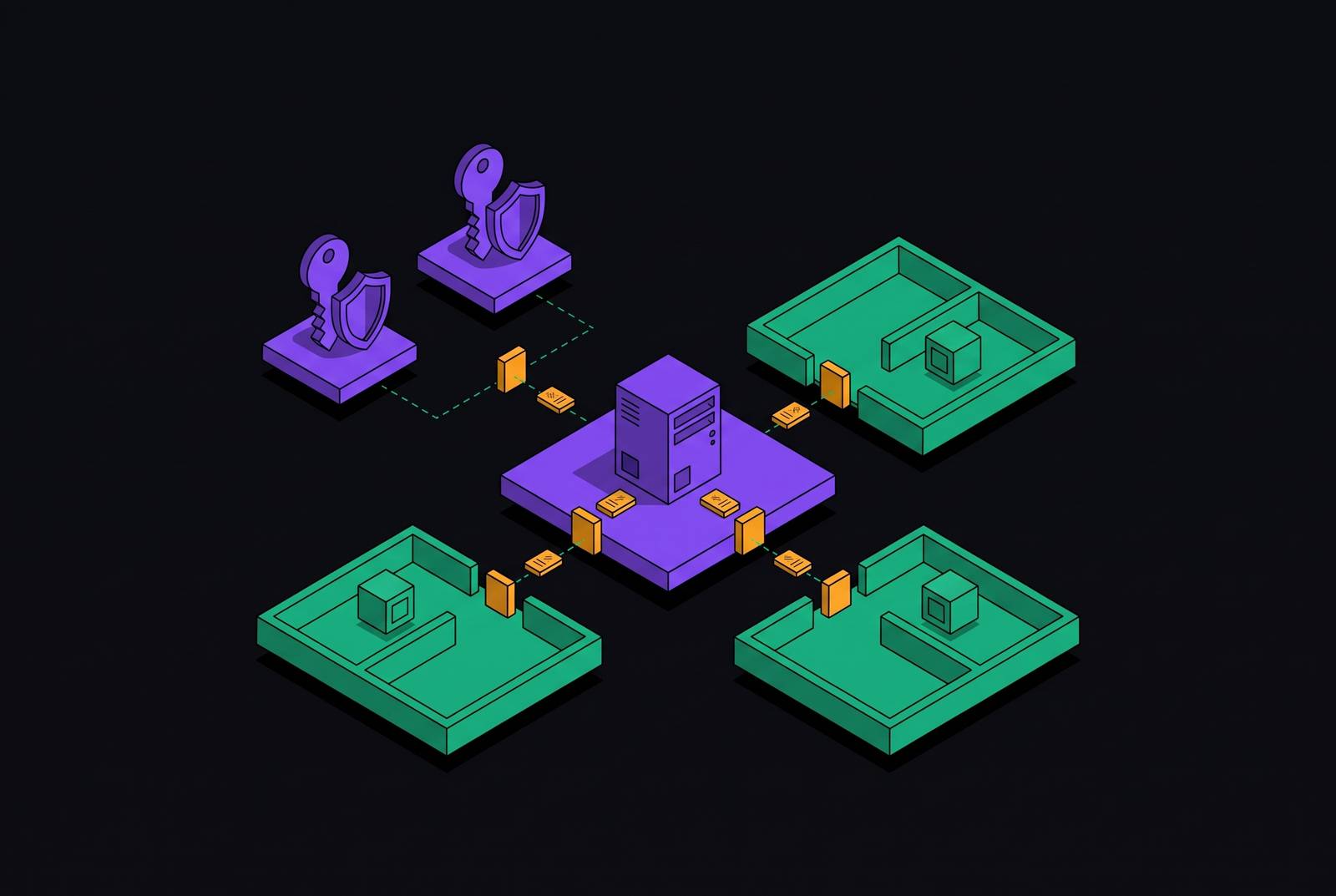
Multi-tenant MCP needs more than valid tokens. It needs a governed entry point that decides which tenant can use which tools, under whose identity, and within what limits. Federated authentication makes that possible when a gateway combines identity, tool scoping, routing, and audit. Because MCP supplies neither a tenant model nor mandatory authentication, that gateway is the practical foundation for secure enterprise deployment.
Why MCP has no built-in tenant model and why that matters
MCP defines no tenant_id, no built-in per-tenant credential scoping, and no standard way to pass tenant context from user to AI host to MCP client to MCP server to backend API. Its original local-first model assumed one process, one set of credentials, and one context window. Shared servers break that assumption. A server that cannot distinguish tenants cannot enforce their boundaries, separate their quotas, or attribute their actions.
Authentication is optional, although the authorization framework is prescriptive when used. It specifies OAuth 2.1 with PKCE S256, RFC 9728 Protected Resource Metadata, and RFC 8707 Resource Indicators. Those rules govern implementations that invoke the framework. They do not make every MCP connection authenticated, and authentication alone does not establish tenancy. The infrastructure operator inherits the missing controls.
What production multi-tenant MCP deployments actually look like in 2026
Dedicated instances give each tenant its own MCP server in a container or namespace, with credentials injected at startup and routing handled at the ingress layer. This provides strong separation at a cost. Resource use and orchestration overhead grow as more tenants join, so dedicated instances work better for small deployments or when physical separation is required.
Pooled deployments take the opposite approach, sharing one server process across tenants. The server extracts tenant identity from JWT claims, URL paths, or headers, and every tool handler applies filtering such as WHERE tenant_id =?. This is efficient but unforgiving of missed checks. Every handler must enforce the boundary, and if one fails, tenants that share the process can be affected.
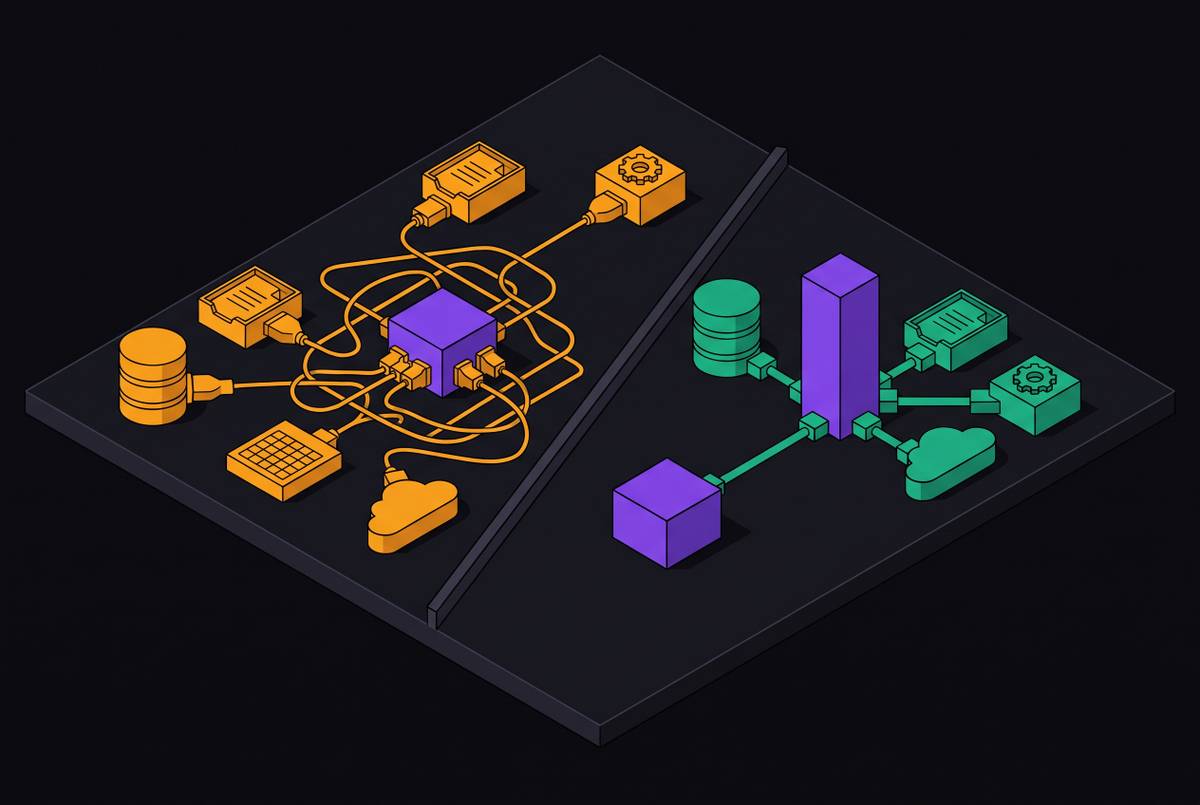
The federated gateway moves that enforcement out of individual servers and into a central layer. Downstream servers can remain tenant-unaware because the gateway handles authentication, authorization, routing, and audit. This is the dominant pattern for large enterprises. By mid-2026, gateway tooling had become a recognizable category with a common baseline of tool aggregation, namespacing, single endpoints, and centralized authentication and role-based access control.
How the federated gateway pattern handles identity, scoping, and routing
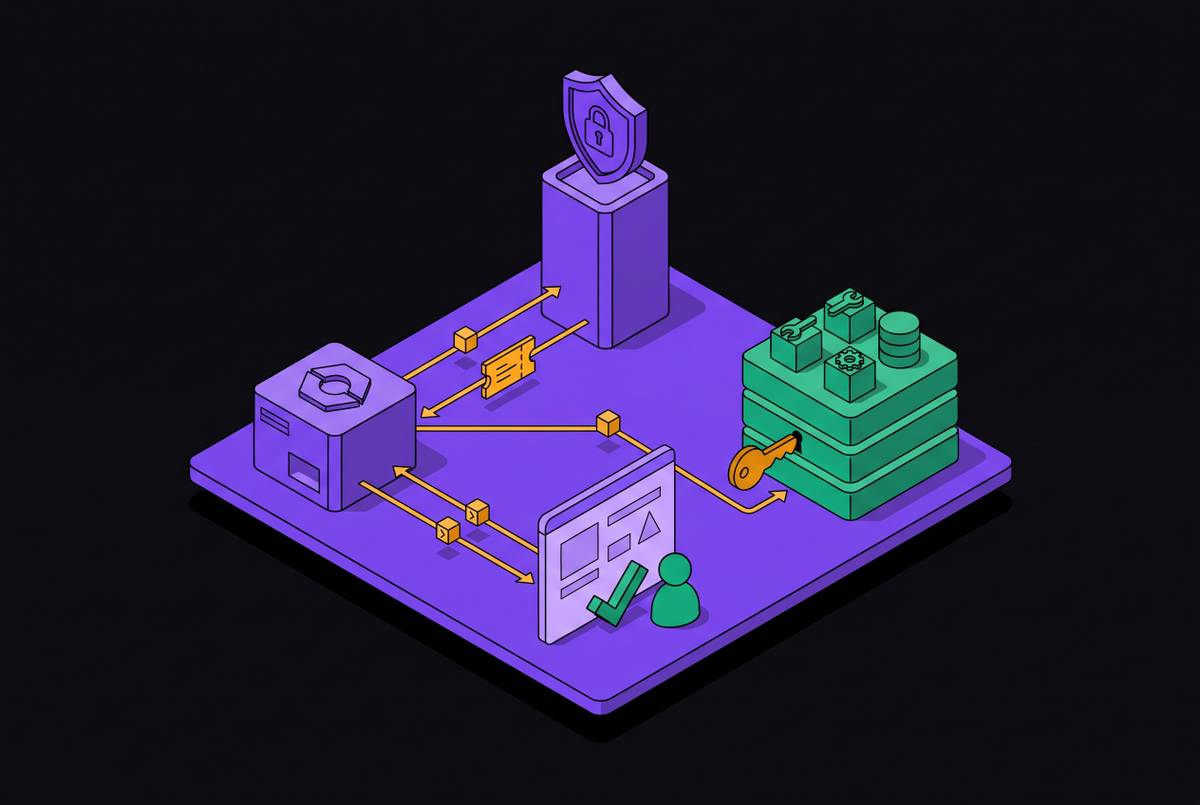
Each tenant authenticates through its own identity provider. The gateway reads the presented JWT’s iss claim, selects a trusted provider, and verifies the token against that provider’s JWKS. Trust comes from the configured issuer list. Strict mode blocks anonymous access, and audience validation rejects tokens issued for another relying party even if their signatures are valid. Adding a tenant’s issuer changes the gateway’s policy but leaves downstream servers as they are.
Deny-by-default entitlements filter tools/list, so the same MCP URLs can expose different capabilities to different tenants. An agentgateway and Keycloak reference architecture gives Acme 25 tools, Globex 13, and Initech 6. Contracts determine access. A standard-tier customer with a data export add-on can therefore receive analytics tools that an enterprise-tier customer has not purchased.
Stable names make those entitlements enforceable across servers. Server-name prefixes tell tools such as payments_create_charge and invoicing_void_invoice apart, and setting prefixMode to Always makes it clear how policy matching will work. Static targets preserve declared names independently of discovered services. Names alone do not establish a governance boundary. Federation by billing, analytics, and support domains ties entitlements, quotas, and chargeback to a business owner as well as server identity.
Quota and metering use the same JWT claims as authorization, keeping resource limits tied to the authenticated identity. Routing also needs an explicit failure policy. Choosing a failureMode setting is a business decision: FailOpen keeps healthy targets available when an upstream fails, while FailClosed fails the whole session. In this pattern, new downstream servers inherit centrally defined controls rather than each implementing authentication, authorization, quotas, and billing.
What the July 2026 spec revision and the EMA extension change about this architecture
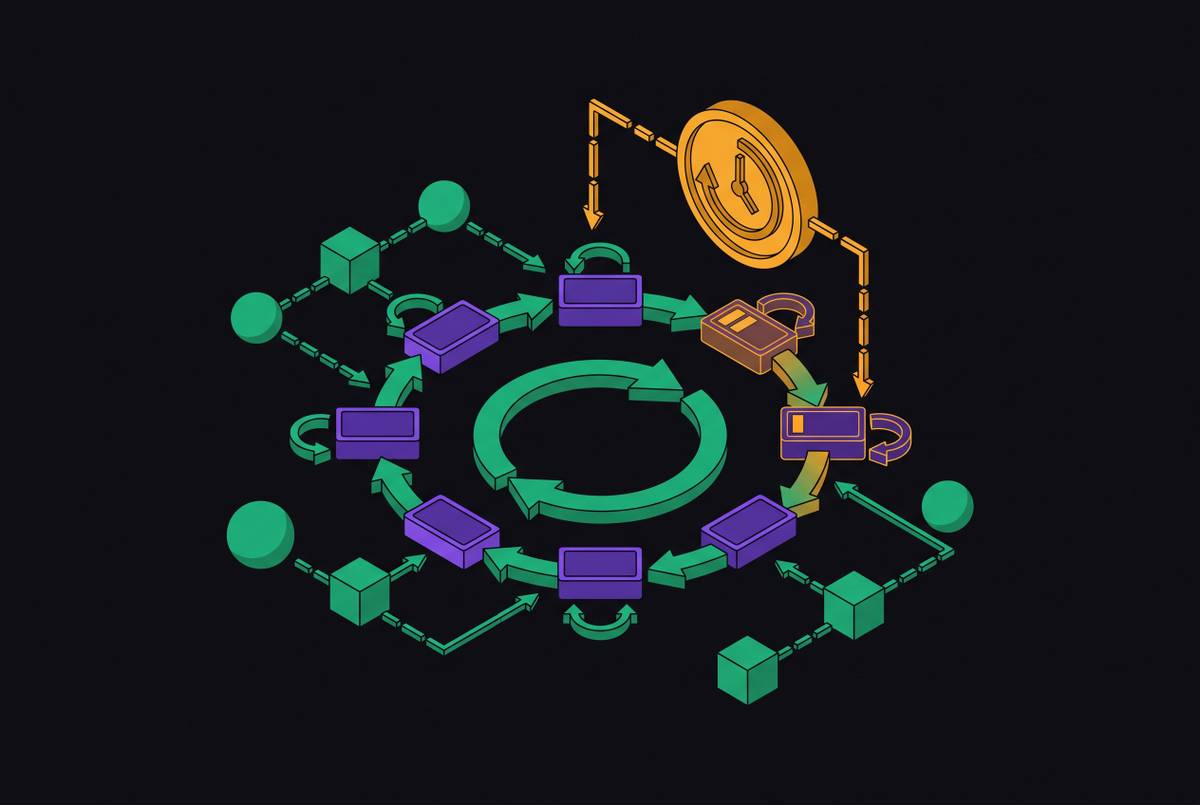
The July 28, 2026 MCP revision removed the initialize/initialized handshake and protocol-level sessions. Each request must supply its own identity and version metadata and be authorized independently. That change fits the gateway pattern well. With no protocol session state to track for each tenant, horizontal scaling and per-request audit are easier. Statelessness supports enforcement but does not supply the policy.
The Enterprise-Managed Authorization extension became stable on June 18, 2026. EMA lets organizations provision MCP server access centrally through their identity provider, avoiding separate OAuth flows for each application. During single sign-on, the client obtains an Identity Assertion JWT Authorization Grant and exchanges it for an access token from the MCP server’s authorization server. Anthropic across Claude, Microsoft inside Visual Studio Code, and Okta shipped support that day. This removes a substantial connection-management burden.
However, connection approval is not runtime authorization inside a session. EMA controls a user’s permission to connect a client to a server and the scope of that connection, but it does not inspect subsequent MCP traffic. The gateway still governs what happens after token issuance. RFC 8707 adds another useful boundary because a resource parameter can contain a tenant-specific path, allowing tenant-scoped tokens whose audience is validated before row-level filtering.
The protocol also prohibits forwarding inbound client tokens to upstream APIs. Upstream calls require separate tokens from the upstream authorization server, preventing a client credential from becoming a general-purpose pass through the backend. Enforcing this in one place saves each server from having to do it. These changes make the architecture stronger but still leave parts of tenant governance undefined.
The attack vectors that multi-tenant deployments must handle at the gateway
In the GitHub MCP attack, a developer’s agent acted as a confused deputy: it read an issue containing buried instructions, entered the user’s private repositories, and sent information out through a pull request in a public repository. The token had blanket access across that boundary. The attacker did not need to steal it because the agent exercised legitimate authority for an untrusted party. Per-domain scoping limits that authority, so an agent working in support cannot use a token that reaches billing.
Token passthrough creates a related route for lateral movement. Forwarding an inbound token to an upstream API can let a broadly authorized tool call cross tenant boundaries. Central enforcement blocks that credential reuse across the estate. Tool poisoning and indirect prompt injection exploit content that persuades an agent to invoke unintended tools, making deny-by-default access important even when the agent is already authenticated. Scoping reduces the damage without depending on the agent to recognize malicious instructions.
Connectors that accept URLs or hostnames introduce another risk. Attackers can redirect them toward internal network endpoints, so gateway egress controls and parameter validation belong before the server. A central registry enforces policy by making unknown servers unroutable. Cross-tenant leakage makes these controls more urgent because an LLM can fold another tenant’s context into a response without the clear transfer that conventional access logs are built to show.
How regulated industries are building on the federated gateway pattern today
FDB MedProof MCP reached general availability on March 31, 2026, as a server purpose-built for AI agent-driven medication decisions. It stages actions for human review rather than executing them directly, separating proposals from execution. That separation makes oversight an architectural property. Early adopter Artera is integrating the service into its patient communications platform, which works across EHRs including athenahealth, eClinicalWorks, Epic, MEDITECH, and Oracle Health.
Grasshopper Bank launched what it described as the first MCP server by a US bank in 2025, exposing read-only access to permissioned data sources. Tool-level scope enforcement protects those records from accidental changes by agents with read-only access. A federated gateway applies the same principle declaratively across a broader server estate, rather than relying on each integration to choose its own limits.
IBM OpenPages 9.2 added MCP support for operational risk, regulatory compliance, and internal audit workflows, with general availability beginning March 23, 2026 for SaaS and March 27 for on-premises and cloud-hosted deployments. Comply launched the ComplyAI MCP Server in April 2026 for securities and advisory compliance work. Bloomberg illustrates the operational payoff more directly, treating prompts and toolchains as configuration and building identity-aware, multi-tenant MCP servers. Its experimentation cycles fell from days to minutes, showing that governance can accelerate adoption while imposing restrictions.
The compliance obligations the gateway must satisfy for regulated data
Regulated data retains its obligations when an agent accesses it. Under GDPR Article 5, purpose limitation becomes difficult when one agent can combine CRM contacts, ATS resumes, and accounting invoices in a single prompt. Per-tenant, per-domain tool scoping turns the permitted reach of a workflow into an enforceable policy. The gateway cannot establish a lawful purpose by itself, but it can restrict which sources the agent can combine.
Erasure requires attention beyond the original source record. Summaries, embeddings, and plugin-stored artifacts can retain personal data after that record is deleted, so Article 17 obligations cannot stop at the connected CRM or support system. Prevention is simpler than chasing every derived copy. Gateway controls can keep data out of processing paths where it should never go, and stateless pass-through keeps the governance layer itself from holding personal data. That design leaves the gateway with less to store and delete, but data held elsewhere still needs to be dealt with.
A zero-retention governance layer’s own handling of personal data becomes a routing decision rather than a choice about where to store another copy. Attribution also needs to be clear when each request is made. DORA’s individual user attribution requirement makes it necessary to distinguish which human or agent acted for which tenant, which is the same identity context needed for per-tenant audit. EU AI Act transparency obligations likewise depend on records of what an agent accessed, on whose behalf, and under what authorization.
What breaks when organizations skip the gateway and what the audit log cannot recover
Incidents in 2025 involved distinct failures: cross-tenant exposure at Asana and unauthenticated remote code execution in Anthropic’s MCP Inspector developer tool. By early 2026, security researchers had catalogued nearly 7,000 internet-exposed MCP servers, with roughly half lacking authentication controls.
The Cloud Security Alliance and Aembit found that a large majority of surveyed organizations could not distinguish human from AI agent activity in their audit logs. A later log review cannot supply identity context that was never recorded, nor reliably reconstruct leaked context folded into an LLM’s answer. The gateway provides real-time visibility because requests pass through a common enforcement point. An audit log supports investigation, but it cannot retroactively deny access.
Banning MCP can also make governance fail. Teams seeking useful tools can move adoption underground, where unregistered servers have no accountable identity or attached policy. A governed path gives them an alternative. The Cloud Security Alliance and Google Cloud’s December 2025 State of AI Security and Governance report found that only a small fraction of enterprise organizations had complete AI security governance policies. Identity and auditability remain production blockers that must be resolved before deployment.
A federated gateway makes production approval rest on enforceable tenant boundaries, per-request authorization, controlled tools, and attributable activity rather than confidence in every server and every agent. Those controls let organizations say yes to useful deployments without accepting unrestricted access.