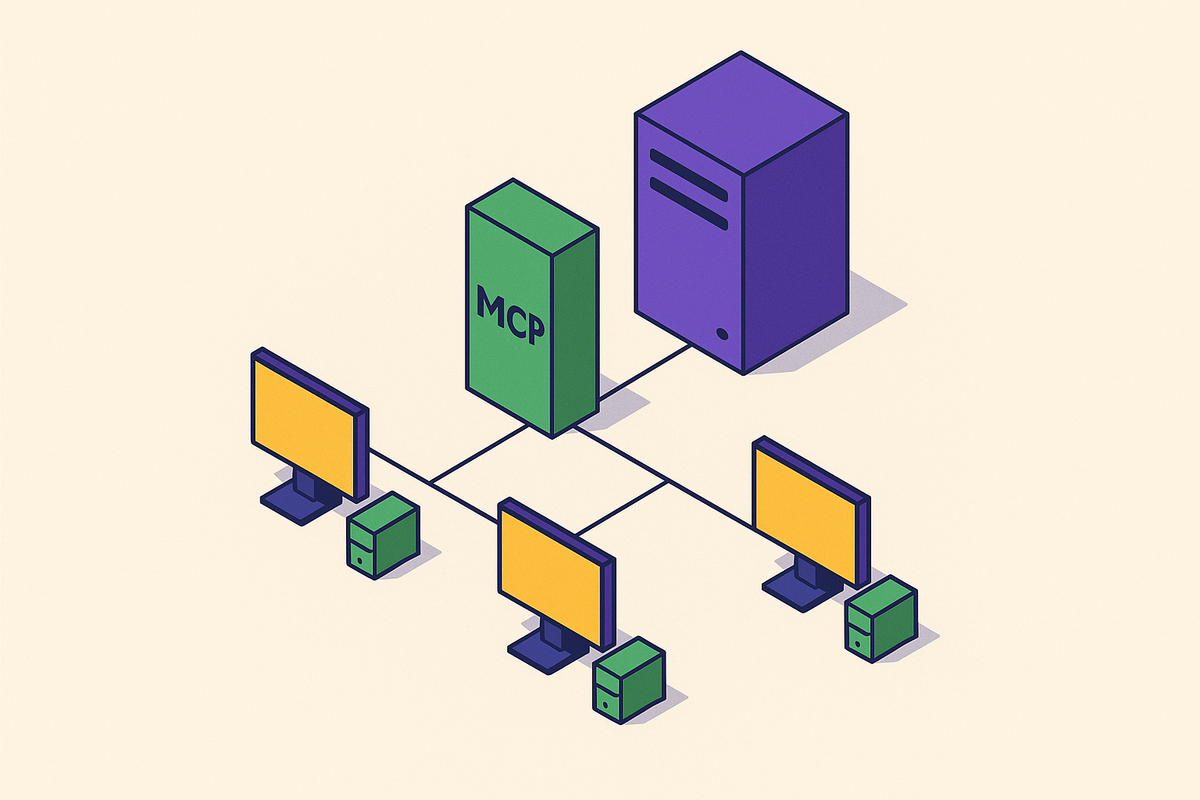
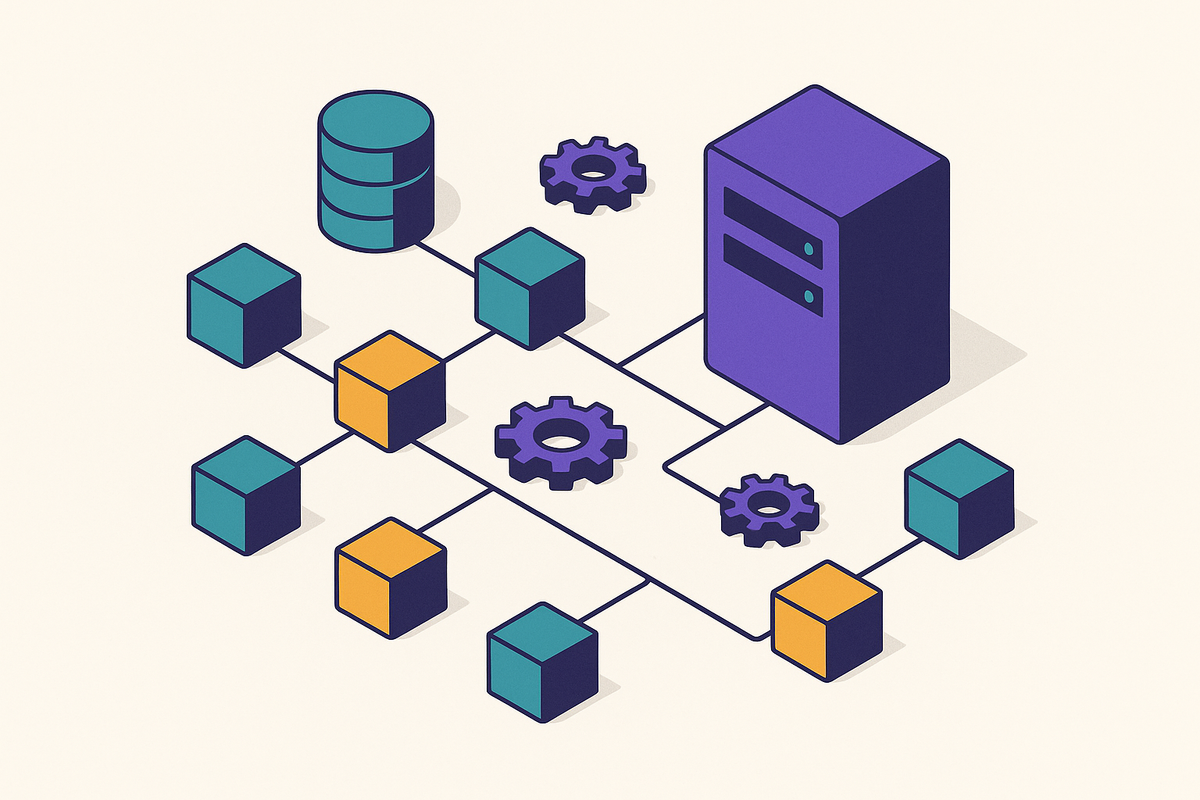
Remote vs Local MCP Server Deployment Trade-Offs
Choosing between local and remote servers sets your security posture before code runs.
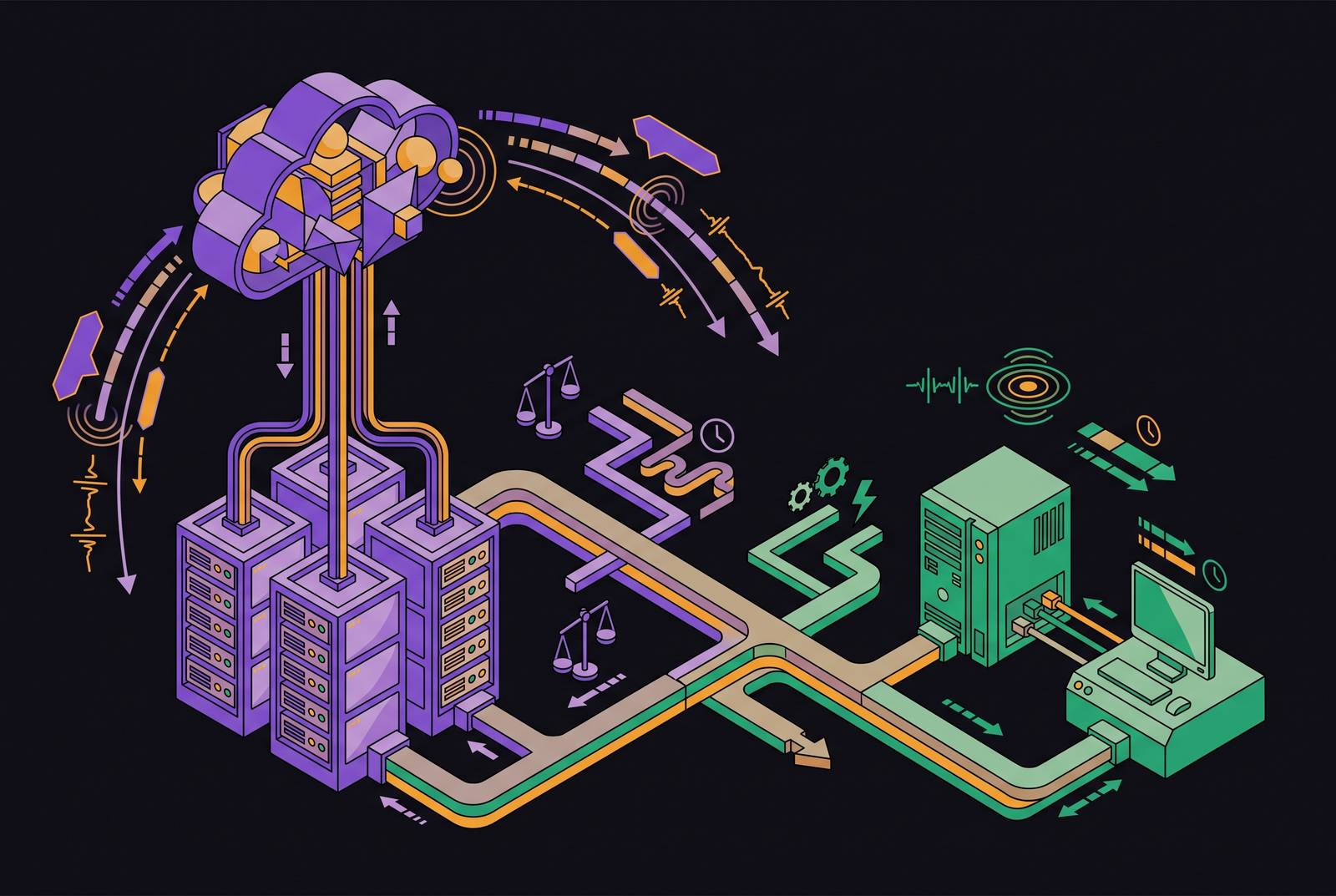
The choice between stdio and Streamable HTTP is a structural decision about where the trust boundary sits. It is a structural decision that sets security posture, credential handling, scalability, observability, and governance overhead before anyone writes a line of application logic.
stdio runs the MCP server as a local process on the same machine as the AI client. It talks over standard input and output, with no network layer involved: no DNS, no TLS, no auth layer required by the protocol. Streamable HTTP takes the opposite shape. It runs the server as an independent network service reachable by URL, using HTTP with optional Server-Sent Events for streaming, and it replaced the older HTTP+SSE transport in March 2025.
The protocol's own auth specification only covers HTTP transports. stdio sits entirely outside that spec, and nobody can patch that at the application layer without rebuilding what the transport itself is supposed to provide. That single fact explains most of what follows in this piece. Calling the decision "local versus remote" makes it sound like a matter of taste. The transport sets the trust boundary, and every other property, security, credentials, scale, logging, follows from where that boundary sits.
stdio transport's capabilities and limits
stdio earns its place in a specific, bounded set of situations, and inside those bounds it costs a team nothing.
Picture a developer building and testing a new MCP server against a local filesystem, a local database, or a local Docker daemon. There's no reason to add a network layer for that kind of work. stdio gives immediate feedback, asks for no certificate management, and keeps the iteration loop fast. Some data should never leave the machine in the first place, proprietary local files, credentials stored locally, hardware tied to that one computer. A remote server simply cannot reach any of it; only a local process can. The same logic covers offline work: if the data or tool the server connects to already lives on that machine, stdio keeps functioning with no internet connection.
The rule of thumb is simple. If the data lives on the user's machine, local stdio is the right call. If the data lives on shared infrastructure, it isn't.
The ceiling appears the moment a second caller enters the picture, a colleague, a web-based agent, a CI system, because stdio's process model only gives access to the AI client running on that same machine. At that point, the use case itself has changed. Moving to remote is a direct response to a specific trigger, not a maturity milestone. It's a direct response to a specific trigger: a second caller now needs in, and stdio has no way to let them.
How local stdio breaks down at enterprise scale
Pushed past individual developer workflows, stdio creates security and operational problems that compound faster than most teams expect. The very properties that make it easy to spin up are the properties that make it impossible to manage at scale.
Start with the network boundary, or rather, the lack of one. With no network layer, there's no place to insert a proxy, enforce an auth flow, or log traffic centrally. The MCP auth spec only covers HTTP transports, so stdio has nothing at the protocol level to authenticate against. Credentials the server needs to reach SaaS tools, internal APIs, or databases sit in plaintext in a config file on somebody's workstation. Nothing rotates them, nothing expires them, nothing revokes them centrally. When an employee leaves the company, figuring out which tokens are still live turns into guesswork.
Configuration drift follows close behind. Each developer installs and sets up servers on their own, so a team of ten people can end up running ten different configurations of what's supposed to be the same tool.
Logging fails in the same structural way. stdio logs are fine for basic debugging, but they don't record which user triggered a tool, what data came back, or whether sensitive personal information got exposed in the process. For any team under DORA, HIPAA, or GDPR, local logs simply can't meet the bar.
All of this adds up to shadow AI. When anyone can launch a custom MCP server with no authorization flow attached, IT has no record of that software anywhere, because it never registers centrally in the first place. There's no governed path to production, so the ungoverned path becomes the only path that exists. And the exposure is not theoretical: a single compromised laptop running a local MCP server with access to production databases or internal APIs becomes a full credential exfiltration path.
None of this requires a careless developer. It's what the architecture produces on its own, regardless of how careful any individual person is being.
Streamable HTTP's capabilities and remaining gaps
Streamable HTTP closes the visibility and centralization gaps that stdio structurally cannot close. But a remote server nobody is watching is just another flavor of ungoverned software: the transport opens the door to control without walking through it automatically.
The network boundary is the real prize here. Once a server sits behind it, a team can place a proxy in front of it, enforce OAuth logins, and log every call that comes through, none of which is possible on a stdio transport. Stateless request handling means the server works with standard load balancers and reverse proxies, which opens the door to horizontal scaling in a way a single stdio process never could. Deployment gets simpler too: push one update to the remote server and every user gets it at once, with no version skew across laptops.
Streamable HTTP adds 30 to 200 milliseconds of latency per call compared to stdio. For almost every enterprise use case, that's a fair trade: correctness and security cost a fraction of a second, but buy reliability and safety.
What remote does not do is solve governance by itself. It only moves the place where governance has to be built. An HTTP endpoint with no proper auth, no scoping, and no logging isn't a controlled service, it's an attack surface. The spec caught up to this in its November 2025 revision, which requires OAuth 2.1 with PKCE for any server reachable over the internet. Adoption has not caught up to the requirement: only 8.5% of MCP servers currently implement OAuth 2.1, despite it being mandatory for remote deployments. That compliance gap is exactly where the security discussion needs to start.
Security posture is not determined by transport alone, but transport sets the default
Neither transport is automatically safe, and neither is automatically dangerous. A local MCP server with broad shell access can be riskier than a remote server offering only narrow, read-only tools. A remote server with sloppy authorization can be worse than a local server scoped tightly to one repository. Transport sets the default level of exposure. It doesn't set the final word on how safe the deployment actually is.
Local transport's threat model centers on code execution: the server runs with access to the user's own machine and often keeps backend credentials stored right there. CVE-2025-6514, carrying a CVSS score of 9.6, showed how bad that can get: OS command injection through a malicious server authorization endpoint in mcp-remote achieved full remote code execution on the client operating system, across more than 437,000 downloaded environments. A separate architectural flaw disclosed by OX Security in April 2026 found something even more systemic: the MCP stdio transport was executing operating system commands with no sanitization or validation at all, enabling remote code execution on any vulnerable host across a supply chain touching hundreds of millions of package downloads. Both vulnerabilities trace directly back to the same property: stdio gives a local process real power over the local machine, with no boundary checking what crosses that line.
Remote transport carries a different set of risks. Standing up an internet-facing service means taking on an operator trust boundary and ongoing hosting responsibility. A hosted server does keep runtime and backend credentials off individual developer machines, but only if the operator actually enforces auth, scoping, and logging, the same requirement raised at the end of the last section.
Some risks don't care which transport a team picked. The Postmark MCP incident in September 2025 is the clearest example: a counterfeit email server package called postmark-mcp published a run of clean versions to build trust, then slipped a hidden BCC into version 1.0.16 that silently forwarded every agent-sent email to an attacker-controlled domain. The package passed review at install time because it behaved honestly right up until it didn't. That's a supply-chain problem, sitting above the transport layer.
OWASP has now cataloged this landscape formally. Its first dedicated MCP Top 10 project lists ten risk categories most likely to compromise an MCP deployment, spanning token mismanagement, tool poisoning, shadow MCP servers, and context over-sharing. Security work is required on both transports. What transport actually decides is where that work is hardest to skip and where it's easiest to ignore.
Credential handling, secrets management, and the identity lifecycle each transport creates
Transport choice decides who owns the credential lifecycle, and that ownership question carries more operational weight than the specific auth mechanism a team ends up choosing.
Under local stdio, credentials live in the user's own environment, shell profiles, config files, places the operator never sees and can't touch. There's no central rotation, no expiry, no revocation. For a single developer running personal tooling, that's a non-issue. The moment that same server touches shared company resources, it becomes an audit liability, and the absence of protocol-level auth doesn't mean credentials aren't there. It means they're present with no lifecycle attached to them at all: the GitHub MCP server's Personal Access Token sitting in a plaintext config file on a laptop is still a credential, just one nobody is managing.
Remote HTTP flips the ownership entirely onto the operator, who now issues, scopes, rotates, and revokes every credential in play. That's the capability that makes central governance possible in the first place, and it's a responsibility that can't be handed back to individual users once it's taken on.
The identity infrastructure around this pattern is catching up quickly. Auth0 by Okta shipped Auth for MCP to general availability in May 2026, folding OAuth 2.1 and OpenID Connect into the MCP ecosystem along with Client ID Metadata Document registration and on-behalf-of token exchange for downstream API calls. Atlassian's Remote MCP Server moved from Preview to Stable after completing an OAuth 2.1 compliance audit, added Jira Service Management endpoints, and landed in Claude Desktop's connector catalog. Both are signals that the tooling needed to support remote credential lifecycles is actually being built, not just promised.
Scalability and update delivery as direct transport properties
The same properties of Streamable HTTP that make it governable also make it scalable and easy to update. These are not separate benefits sitting side by side but the same architectural fact expressed in different operational contexts.
stdio's process model is single-machine by nature: one process, one user, nothing that scales horizontally. A second concurrent caller means a second local installation somewhere else, and that's a configuration headache, not a scaling plan. Streamable HTTP's stateless request handling works with standard load balancers, reverse proxies, and cloud autoscaling, the same infrastructure most enterprises already run for their other HTTP services. The July 28, 2026 spec revision pushed this further by making MCP stateless at the protocol layer itself. Most of the sticky-session infrastructure teams spent the previous two years building is now dead weight. That drop in complexity makes horizontal scaling for remote deployments considerably cheaper to run.
Update delivery follows the same split. Remote means one deployment reaches every user at once, with no version skew to chase down. Local means each user runs whatever version they happened to install, possibly for months or years afterward, which turns the local update path into a structural liability for anything security-related.
Failure surface is the honest trade-off on the other side of the ledger. A local server failing takes down one machine. A remote server failing takes down everyone using it, at the same moment. Remote deployment still makes sense despite that risk. It's a planning requirement: teams choosing remote need to invest in availability that a local deployment never asked for. The ecosystem has already made its choice here. As of April 2026, more than four in five of the top-searched servers on PulseMCP are already remote Streamable HTTP servers, which tells you where production deployment has settled as the default target.
Observability and audit logging as the governance gap neither transport closes automatically
Knowing what an AI agent actually touched is only as good as the infrastructure built to record it, and right now, neither transport hands a team structured audit logging for free. A team that assumes deployment alone gives them observability is running blind, no matter which transport sits underneath.
stdio offers nothing to inspect centrally. There's no endpoint to monitor, no MCP traffic flowing anywhere a central system could watch it. The logs that do exist support basic debugging on that one machine and stop there. Streamable HTTP changes the physical possibility of logging, since traffic now flows through a network boundary a proxy can sit in front of, but the logging itself still has to be built and enforced. Neither transport does the governance work by default. Both require a deliberate layer on top that captures who called what tool, what data came back, and whether anything sensitive moved through the system, turning a working deployment into a governed one.